
NEWS · INDIA · POLITICAL ANALYSIS
Naam Tamilar loses its deposits in Dharapuram and Madurantakam – “Is Tamil nationalism losing, or is the hollow politics conducted in its name losing?”

Dear friends,
The Dharapuram and Madurantakam by-election results have once again brought into discussion the vast gap between speaking about Tamil nationalism in Tamil Nadu and winning people’s votes in its name.
Voting in these two constituencies took place on October 6, 2026, and the results were announced on October 9.

In Madurantakam, Tamilaga Vettri Kazhagam’s Maragatham Kumaravel won with 74,048 votes. The DMK received 54,008 votes and the AIADMK 47,450. But Janakiraman, the candidate of Seeman-led Naam Tamilar Katchi, received just 2,709 votes, or 1.46 per cent of the votes cast.
In Dharapuram, Tamilaga Vettri Kazhagam’s Sathyabama won with 66,841 votes. While the DMK received 57,370 votes and the AIADMK 45,280, Naam Tamilar Katchi’s Karthika secured only 5,268 votes, a share of 2.92 per cent.
In both constituencies, Naam Tamilar Katchi could not secure even the one-sixth share of votes required to retain an election deposit.

There is another point that deserves attention.
In the Assembly general election held in April 2026, Naam Tamilar Katchi had received 4,950 votes in Madurantakam. That has now fallen to 2,709. In Dharapuram, its earlier tally of 6,026 votes has declined to 5,268. Since the total number of votes cast also fell in the by-elections, these figures alone cannot explain every reason behind any change in voters’ preferences.
But the central question here is a different one.
Why has a party that repeatedly speaks about the Tamil people’s language, identity, land, history and rights been unable to turn those sentiments into broad electoral support?
Tamil nationalism cannot be confined to emotional speeches from a political stage. It must be a political outlook that connects the Tamil people’s political rights with their everyday lives.
For a farmer, the price of agricultural produce matters. For a young person, employment matters. For a family, education, healthcare and the cost of living matter. Can identity-based sentiment alone be turned into electoral support without offering practical solutions to these concerns?
Similarly, is a leader’s speaking ability alone enough for a party’s political growth? Does it not also need an organisation that works continuously with people in every village, action to address local problems, and the trust of different communities?
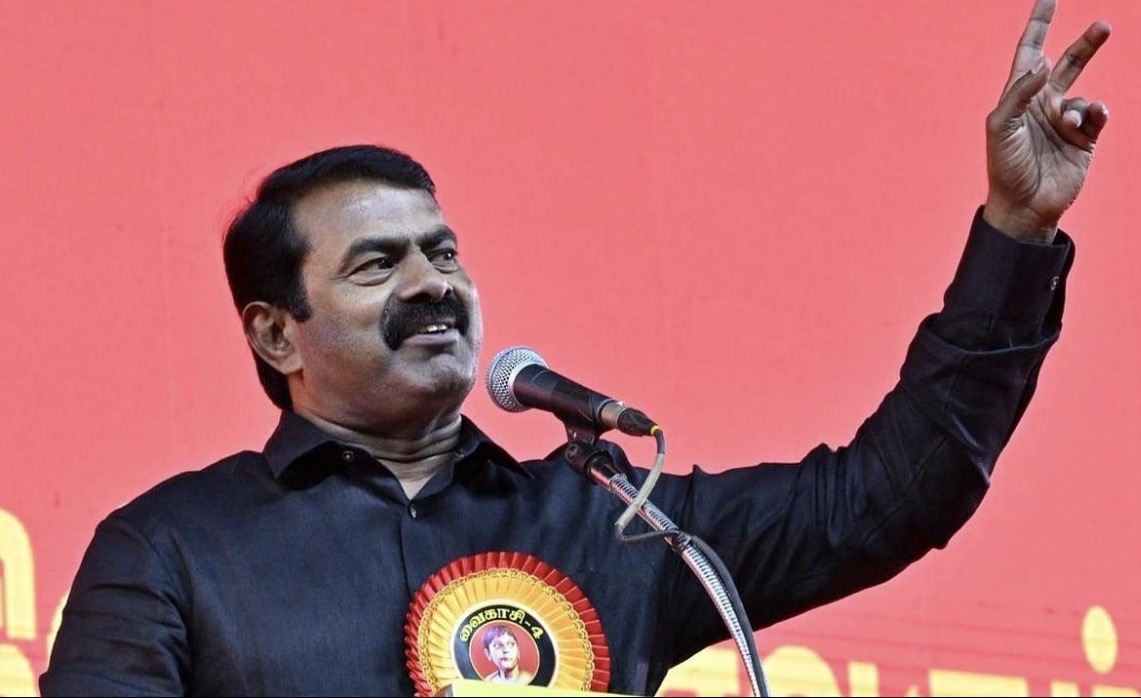
These questions cannot be avoided when examining Naam Tamilar Katchi’s electoral setback.
At the same time, it would not be sound to treat the defeat of a party operating in the name of Tamil nationalism as the complete defeat of Tamil nationalist thought.
Different political parties also put forward attachment to the Tamil language, Tamil identity, social justice and state rights. It is therefore unreasonable to expect everyone with Tamil nationalist sentiments to vote for one particular party.
What Naam Tamilar Katchi needs to examine is not merely whether Tamil nationalist sentiment exists among the people, but why the politics it offers has failed to win their trust sufficiently.
In other words, repeatedly invoking an idea does not, by itself, make people accept someone as that idea’s political representative.
We cannot say that Dharapuram and Madurantakam have settled the future of Tamil nationalism. But these results have opened a debate about whether Naam Tamilar Katchi, which contests elections in its name, needs to reconsider its political approach, engagement with people, local organisation and practical programmes.
The final question, then, is this.
Is Tamil nationalism itself losing in Tamil Nadu? Or is the political approach that contests elections by invoking Tamil nationalism failing to earn people’s trust?
The answer must be sought by examining people’s electoral choices and their everyday needs, rather than in emotional slogans.
– Swami Shankarananthaa
Reader Comments
Loading comments…