
ARTICLES · EELAM HISTORY
From Sirumalai to Kopay – The First Female Martyr
When a young woman named Sahaya Seeli Peterpillai was born in Mannar on January 4, 1967, no one could have imagined that, twenty years later, she would be recorded as the first female martyr in the history of the Liberation Tigers of Tamil Eelam’s women’s armed struggle.
Sahaya Seeli, who grew up in Adkaaddiveli in the Mannar district, later entered the armed struggle under the name Malathi. She died during fighting with the Indian Peace Keeping Force in Kopay on October 10, 1987, and entered history as the first female LTTE fighter to die on the battlefield.

But Malathi’s history cannot begin only on October 10, 1987. To understand how a Tamil woman from Mannar became an armed fighter, we must first examine how women entered the Tamil Eelam liberation struggle.
Women’s Early Contributions
When the Liberation Tigers of Tamil Eelam was formed on May 5, 1976, it was a small armed movement consisting entirely of men. Yet women contributed even during its early journey. Their contribution was not initially an armed one. Women became connected to the struggle through confidential assistance, providing shelter to fighters, protecting the wounded, carrying information, and supporting political and publicity work.
On April 25, 1978, the Liberation Tigers of Tamil Eelam issued their first public statement claiming responsibility. Urmila Devi typed that historical statement. Even before female armed fighters had emerged, a woman had contributed to one of the movement’s important early political activities.
Later, Nirmala also gave shelter in her home to Seelan, who had been wounded in the attack on the Chavakachcheri police station. In this way, women’s early contribution to the Tamil Eelam liberation struggle was largely that of supporters.
The Change After 1983
This situation began to change after 1983.
The Thirunelveli attack and the ethnic violence of July 1983 that followed changed the course of the Tamil Eelam armed struggle. At that point, the LTTE had 29 full-time members and began rapidly expanding its personnel for the armed training that the Indian government was to provide.
It was during this period, when Maththaya, Santhosam Master, Basheer Kakka, Johan Father and Ramu were recruiting new members under Pandithar in Tamil Eelam, that an effort emerged to bring women into organized political work.
University students Shanthi, Rathi and Punitha, along with Kamini, who was not a university student, were brought into that early women’s political section. Even then, women were not given weapons. Their contributions lay in political work, publicity, contact with the public and medical assistance.
But women’s journey did not stop there.
The student hunger strike at the University of Jaffna in 1984 marked another important stage in this change. Nine students began a hunger strike at the university to demand the educational rights of Tamil students who, because of the ethnic violence of 1983, could no longer continue their studies at universities in southern Sri Lanka.
Four of them were women: Jaya, Vanaja, Lalitha and Mathivathani. On the night of January 16, 1984, the LTTE removed those hunger-striking students from the university and took them to India.
It was during this period that the question arose of whether women’s contribution should remain confined to political and support work. The idea grew stronger that, if men received armed training, women too should have the same right and responsibility.
The historical answer came in 1985.
The First Women’s Military Training at Sirumalai
On August 18, 1985, the LTTE’s first women’s military training camp began in the Sirumalai forest in the Dindigul district of Tamil Nadu, India.
There were 91 female fighters in that first group.

One of those 91 women was Malathi, whose birth name was Sahaya Seeli Peterpillai, from Adkaaddiveli in Mannar. Malathi began her military life in that first women’s group, which took women’s contribution to the Tamil Eelam armed struggle to a new stage.
Until then, women’s contributions to the Tamil Eelam liberation struggle had largely remained within the roles of supporter, political activist, medical assistant and publicity worker. With the Sirumalai training, that boundary began to break down. Women were developed into organized armed fighters as well.
The Sirumalai training was not simply basic instruction at an ordinary camp. It was designed to develop a guerrilla fighter within a difficult natural environment of mountains, forests, rocks, ascents and descents. Training began at five in the morning. Alongside running, physical exercise, rope climbing, mountain climbing and overcoming obstacles, the training covered handling firearms, dismantling and reassembling weapons, shooting practice, drill, guerrilla attack methods, intelligence, basic medicine, political classes and martial arts.
The foundation of that training was that women should not be excluded from the military instruction given to male fighters, but should also be developed into fully trained fighters.
Ponnamman, one of the LTTE’s early military commanders, served as a principal instructor at the first women’s training camp. Bharathiraja was responsible for the camp. Selvarasa Master and Nesan also took part in the training work. Indran Master contributed to drill and firearms training, Mano Master to guerrilla attack methods, Madhavan Master to intelligence training, and Sothi Master to self-defence training. Medical and political classes were also part of the programme.

Sirumalai taught more than firing a gun. Another aspect of the training was that a fighter should be able to meet basic needs without depending on others. Carrying food supplies up from the foot of the mountain, building their own living quarters and creating basic facilities turned the camp’s daily life itself into training.
It was in that Sirumalai forest that the young woman Sahaya Seeli Peterpillai became the armed fighter Malathi.
Women Who Crossed Social Boundaries
The significance of this change becomes clearer when viewed against the circumstances of Tamil society at the time. It was a period when beliefs were strong that a woman should remain at home, should not travel alone, should live within her family’s decisions, and that war belonged to men and weapons should be held only by men.
Women who came from that social environment and completed their training at Sirumalai later returned to their homeland. Under Victor, the commander for the Mannar district, female fighters were also prepared for direct combat.
Women’s First Battlefield
On September 2, 1986, under Commander Victor’s leadership, a bridge on the approximately two-mile-long causeway connecting Mannar Island to the mainland was destroyed.
For three consecutive days, September 2, 3 and 4, the fort area on Mannar Island remained under LTTE control. During that time, female fighters entered the field for the first time, under Deepa’s leadership, in an operation to stop the advancing army on one part of the front.
Afterwards, again under Deepa’s leadership, the major battle fought in Adampan, Mannar, on October 12, 1986, became an important early direct-combat engagement for the women’s unit. The women who had learned to handle weapons at Sirumalai now faced the Sri Lankan army on a real battlefield.
If women had previously served as political workers, medical assistants and publicity workers, after Adampan they had also become direct participants in the armed struggle.
Malathi belonged to that first generation.

But it was in 1987 that an event made the name Malathi known throughout Tamil Eelam.
From the Indo–Sri Lanka Accord to Armed Conflict
The Indo–Sri Lanka Accord was signed on July 29, 1987. The Indian Peace Keeping Force then entered the northern and eastern regions. At that time, a large section of the Tamil population believed that India would secure a solution to their political problem.
On the basis of that belief, the LTTE also began handing over weapons.
But that belief did not last long.
Thileepan’s hunger strike and death occurred in September 1987. Relations between the Indian government and the LTTE then deteriorated rapidly. By October, the situation had reached a point where direct armed confrontation had become unavoidable.
From October 9, 1987, the military operations of the Indian Peace Keeping Force intensified. The next day, direct fighting between the Indian army and the LTTE began in several parts of Jaffna.
The LTTE found itself having to take up again the weapons it had laid down in its trust in India.
On the opening day of that fighting, Malathi’s final day also arrived.
Malathi’s Final Day in Kopay
On October 10, 1987, female fighters were ready in the area of Kresar Road in Kopay. Malathi, Kasthuri, Viji, Jena, Thaya and Ranji were among the women in that group. Although they had AK-47 rifles, they did not have enough ammunition. Not everyone even had proper ammunition pouches. They had to fight with the available rounds tied up in cloth.
As the Indian army advanced from the Navatkuli side, gunfire broke out between the two sides. The female fighters fought against the Indian army, which had greater numbers and superior weapons strength.
The fighting continued. Their ammunition kept diminishing. As the Indian army advanced in greater numbers, it became impossible to remain in the same position and continue fighting. The female fighters began to withdraw.
It was during that fighting that Malathi was wounded by gunfire.
The wounded Malathi could not walk. Viji, who was with her, tried to carry her away. But the Indian army was drawing closer.
Even at that moment, Malathi’s concern was not only for her own life. She was determined that her weapon should not fall into the enemy’s hands. She asked Viji to leave her behind, take her weapon and give it to Annai.
“Leave me and take the weapon. Give my weapon to Annai” was the meaning of her final request as it later lived on in the memories of her fellow fighters.
Having decided that other fighters should not become trapped while trying to rescue her, that her weapon should not fall into enemy hands, and that she should not be captured alive by the Indian army, Malathi handed her weapon to a fellow fighter and swallowed the cyanide she wore around her neck.
On October 10, 1987, in Kopay, the twenty-year life of Sahaya Seeli Peterpillai, known as Malathi, came to an end.
The First Female Fighter to Die on the Battlefield
Malathi was the first woman among the LTTE’s female fighters to die during direct combat.
Before her, women had supported the Tamil Eelam liberation struggle. They had taken part in political work, carried out publicity, protected wounded fighters, later received armed training, and stood on the battlefield in direct combat.
But among those female fighters, the first name to die on the battlefield was Malathi.
That is why her death did not remain merely the death of an individual female fighter. It became a historical point marking that Tamil Eelam women had become direct participants in the armed struggle.
Afterwards, October 10 was observed as Tamil Eelam Women’s Uprising Day within the LTTE’s tradition of remembrance.

Women’s Expanding Military Contribution After Malathi
After Malathi, women’s military contribution expanded further. The journey that began with 91 women at Sirumalai later produced thousands of female fighters. Women themselves trained the next generation of women. Female commanders emerged, and separate women’s military units were formed.
Women moved from infantry into heavy-weapons divisions. Their contributions expanded into various structures, including anti-armour, anti-aircraft weapons, medicine, communications, intelligence, politics, administration and naval forces.
Later, a women’s military unit was also formed in Malathi’s name.
But Malathi’s significance does not lie only in the formation of a unit bearing her name.
A Symbol of Social Change
Malathi also represented a period when women’s place in Tamil society began changing rapidly. She belonged to the first generation of a change that went beyond the idea that a woman should live only within the home: a woman could make her own political decisions, join a movement, face demanding military training and stand directly on the battlefield.
Taking up arms is not the complete measure of women’s liberation. Full liberation has many dimensions: education, economic independence, equal rights within the family, equal participation in social and political decisions, and the right to determine one’s own life.
But neither can it be denied that this generation broke many social boundaries that had long been drawn around what women could not do.
Malathi was one of the early generation of that change.
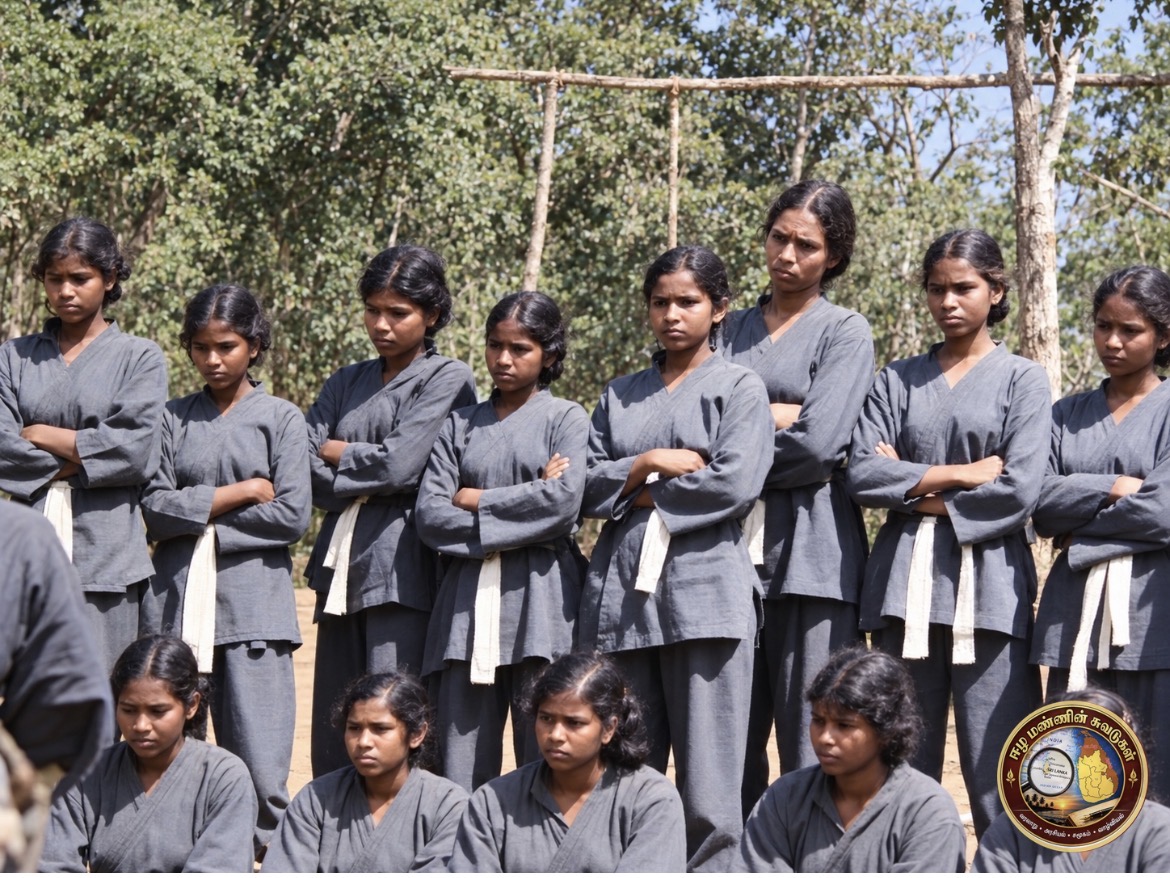
Sahaya Seeli Peterpillai grew up in Adkaaddiveli, Mannar, received military training with the first women’s group in the Sirumalai forest of Tamil Nadu, returned to her homeland, and stood in direct combat. Finally, on October 10, 1987, she died in fighting with the Indian army in Kopay.
She lived for only twenty years.
But the final period of those twenty years linked her name inseparably with the history of the Tamil Eelam women’s armed struggle.
Women who had once supported the struggle became political activists. From behind those political activists emerged women who had received armed training. From the first 91 female fighters trained at Sirumalai emerged a generation that went into direct combat.
Along that path, the first to die on the battlefield was Malathi.
Therefore, Malathi’s history is not merely the history of a female fighter’s final day. Her name endures as the first name in the long history of a period when women’s contributions to the Tamil Eelam liberation struggle evolved from supporters into political activists, armed fighters and commanders.
Swami Shankarananthaa 🙏
Reader Comments
Loading comments…