
ARTICLES · EELAM HISTORY · HISTORICAL COMMENTARY
The Death Sentence Imposed on Oberoi Devan by the Tigers — What Was the Background?

Oberoi Devan worked alongside Thangathurai and Kuttimani during the early years of the Eelam Tamil armed struggle and later led a separate organisation called the Tamil Eelam Liberation Army.
Having maintained contact with the Liberation Tigers during his time with Thangathurai and Kuttimani, his life came to an end amid later disagreements when the Tigers carried out a death sentence against him on 14 August 1983.
Oberoi Devan’s Early Political Involvement
Born in Jaffna on 17 April 1958, Kulasekaram Devasekaram worked at the Lanka Oberoi hotel in Colombo. As a result, “Oberoi” became attached to his name, Devan, and he became widely known as Oberoi Devan.
Oberoi Devan’s political involvement did not begin only after he joined an armed organisation.
Devan, who had studied in Matale, settled again in Jaffna on 1 January 1974. He subsequently attended meetings and seminars of the Tamil United Liberation Front and was drawn to the speeches of its leaders.
On 10 January that year, he too was caught up in the police violence during the final-day proceedings of the Tamil Research Conference.
That experience, and later the death of Pon. Sivakumaran, influenced his political journey.
Devan came into contact with Urumpirai Kulasingam, who was studying at Kokkuvil Technical College. He was attracted by the advice of Kulasingam, who possessed a deep commitment to national liberation and considerable courage. Within a few days of their meeting, however, Kulasingam was arrested by the Sri Lankan state.
Devan, then sixteen years old, was treated as a child whenever he tried to make contact with members of the Youth Front. Some warned that he might be arrested by the police. Nevertheless, he continued to participate in conferences, civil disobedience campaigns, processions and public meetings organised by the Tamil Front.
In August 1976, imprisoned youths began a hunger strike demanding that they either be brought to trial or released. Devan participated in solidarity hunger strikes held outside the prisons at Kokkuvil Manjavanapathy and the Nallur Veeramakali Amman Temple. Through these protests, he came into contact with Paranthan Rajan, one of the leaders of the Youth Front.
During this period, while Devan was on hunger strike at the Nallur Veeramakali Amman Temple, Kulasingam, who had been released from prison, arrived there with Sri Sabaratnam, who had been released alongside him, and several others. Kulasingam introduced them to Devan.

Although this brought Devan into contact with Sri Sabaratnam, Oberoi Devan joined Paranthan Rajan and stayed with other youths at the farm Rajan ran, taking part in discussions and reading agricultural books.
During this period, Oberoi Devan came to regard Paranthan Rajan’s tendency to present himself as more capable and superior to fellow members as a shortcoming, and distanced himself from Rajan.
Later, using his connection with Sri Sabaratnam, Oberoi Devan joined and worked with the group known as the KT Group, at a time when Thangathurai and Kuttimani were operating as a separate group.

TELO–Tiger Understanding and Joint Operations
At that time, the movements did not function with structures as clearly defined as those of today’s political parties. They worked through mutual understanding developed through underground activities, personal friendships, assistance to one another and the sharing of weapons and hideouts. Many who later became leaders of separate movements had initially worked together in this way.
In these circumstances, the KT Group led by Thangathurai began, with Thambithurai Muthukumarasamy’s permission, to use the name of the Tamil Eelam Liberation Organisation, which he had established and which was then inactive.
Devan continued as a member even as the group operated under the name Tamil Eelam Liberation Organisation.
Following a split in the Liberation Tigers organisation led by Velupillai Prabhakaran in the early 1980s, some who left it joined with other newcomers to form PLOTE, the People’s Liberation Organisation of Tamil Eelam.
During this period, the Liberation Tigers of Tamil Eelam, which continued under Velupillai Prabhakaran’s leadership, worked with the Tamil Eelam Liberation Organisation on the basis of mutual understanding.
It was during this period that Oberoi Devan became acquainted with Tiger leader Velupillai Prabhakaran and had the opportunity to associate closely with him.
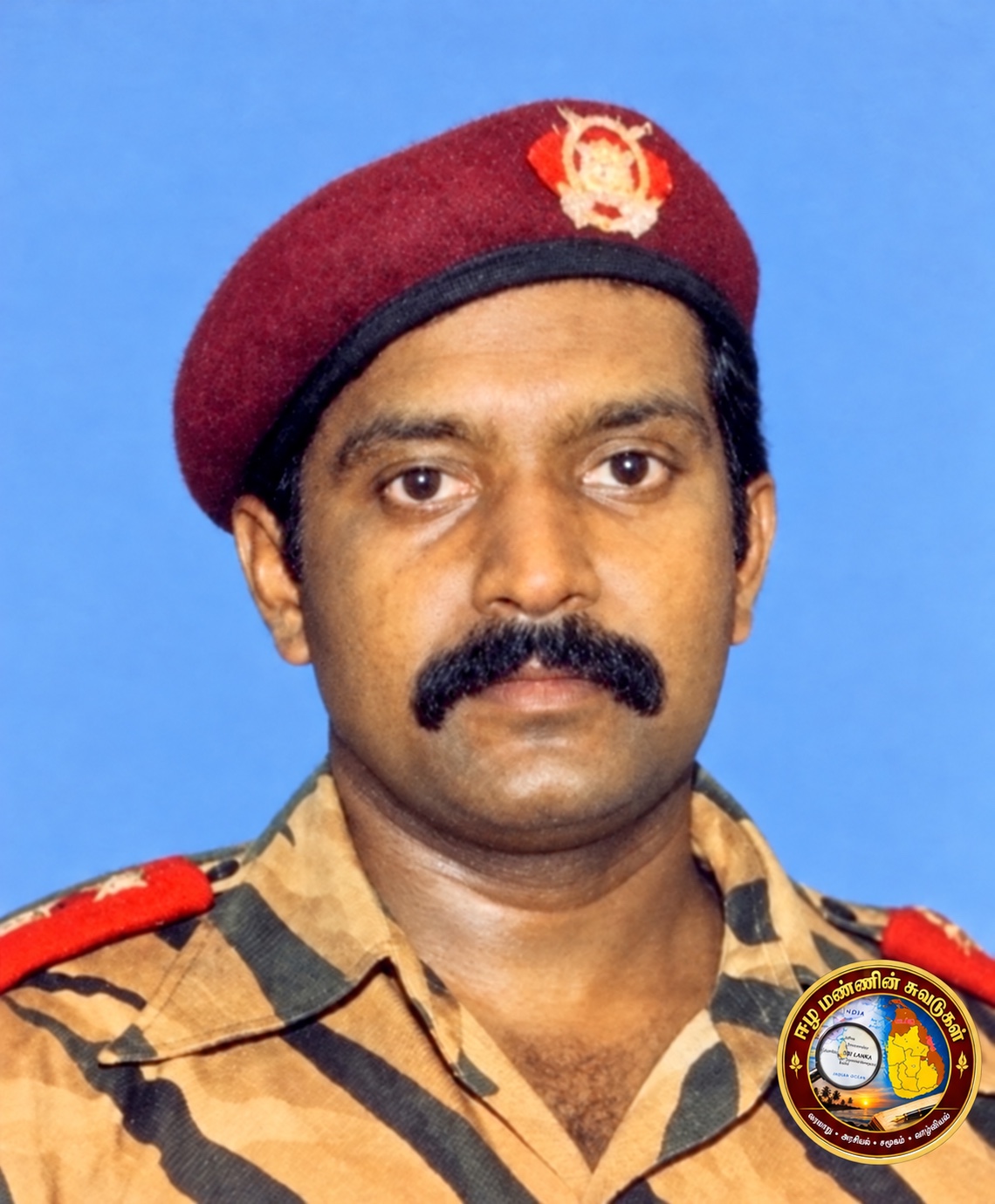
One of the important instances of cooperation between TELO and the Tigers was the Neervely bank robbery on 25 March 1981. TELO members led by Thangathurai and Kuttimani and the Tigers led by Prabhakaran worked together in that operation.
Although the robbery was successfully carried out jointly by the two movements, Thangathurai and Kuttimani, who had taken part, were unexpectedly arrested on the night of 5 April 1981. They were arrested by Sri Lankan state forces while waiting for a boat at Manalkadu beach to travel to Tamil Nadu.
Even after the arrests of Thangathurai and Kuttimani, the Liberation Tigers and the Tamil Eelam Liberation Organisation continued to work on the basis of mutual understanding.
It was during that period, on 2 January 1982, that the Tigers carried out a death sentence against Sadasivam Sivashanmugamoorthy, known as Sundaram, on the accusation of using the Tigers’ name.
It was Sri Sabaratnam himself who brought from India the leaflet titled “The Reward for Betrayal,” issued by the Tigers claiming responsibility for that action and explaining its reasons.
Oberoi Devan Leaves TELO
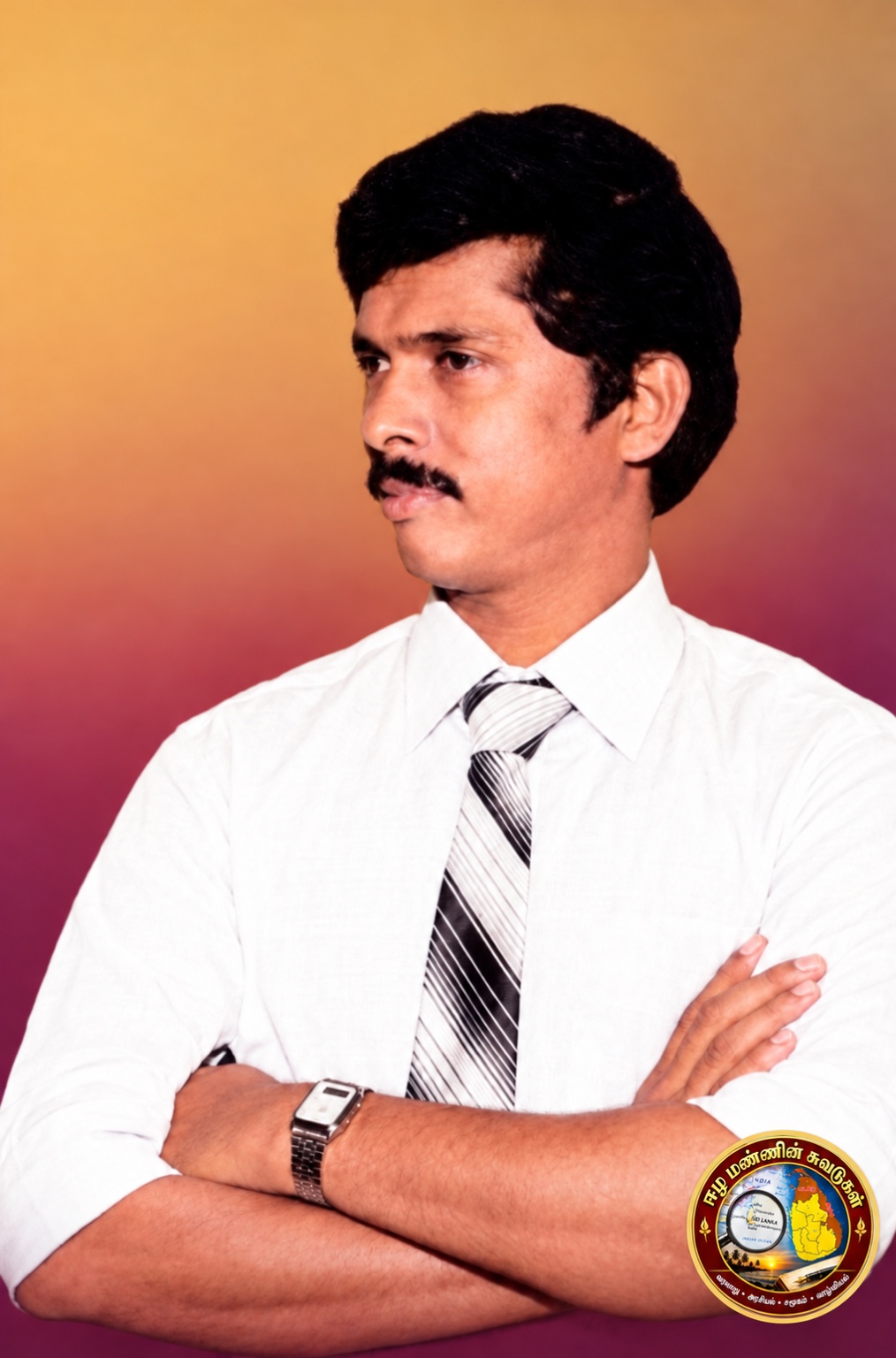
During this period of cooperation with the Tigers, TELO’s leadership saw the Tigers’ organisation grow enormously through a series of successful attacks. Becoming jealous of the Tigers, it continually instilled its hostility towards them among its own members.
The hostility towards the Tigers cultivated in this way was also present in Oberoi Devan, then a TELO member. When dissatisfaction with Sri Sabaratnam’s conduct as leader led him to leave TELO amid internal disagreements, he went on to lead TELA, the Tamil Eelam Liberation Army, rather than coming forward to work with Tiger leader Velupillai Prabhakaran, with whom he was already acquainted.
Rather than leaving TELO over his own personal likes and dislikes and forming a separate movement in 1983 with a membership numbering in the double digits, Oberoi Devan, whose goal was the liberation of Tamil Eelam, should have worked with existing movements in the interests of the Tamil Eelam people. Instead of aspiring to leadership and becoming one of the leaders of thirty-six movements, he should have prioritised uniting the forces working for Tamil Eelam’s liberation.
During his lifetime, Oberoi Devan, who established the Tamil Eelam Liberation Army, did not carry out any military operation against Sri Lankan state forces that could be singled out as noteworthy.
The Accusation of Extortion in the Tigers’ Name and the Final Action
Instead of introducing himself to Jaffna town traders and demanding payments in the name of his own TELA movement, which was unfamiliar to the public, he began collecting extortion money in the Tigers’ name.
As these incidents continued, the Tigers received information that someone was collecting money from traders in their name and began looking for him.
Sellakkili Amman, who had previously worked as a driver at the Anna Coffee business, learned that money had also been demanded from its owner using the Tigers’ name.
The Tigers subsequently went there and identified the person demanding money as Oberoi Devan, the leader of TELA.
They warned him not to collect money using their organisation’s name.
However, when the collection of money in the Tigers’ name continued despite that warning, the Tigers carried out a death sentence against Oberoi Devan on 14 August 1983 on the accusation of extorting money in their name.
Although Oberoi Devan knew of the death sentence that the rapidly growing Liberation Tigers of Tamil Eelam, an organisation with strict controls, had imposed on Sadasivam Sivashanmugamoorthy, known as Sundaram, for using their movement’s name, he defied the Tigers’ warning and brought about his own death.
TELA did not disappear entirely after Devan’s death. Although activities continued in its name, the loss of its leader affected the organisation’s continuity.
Later, TELA split into two and operated in TELA–PLOTE and TELA–NLFT alliances. Yet it remained one of the many organisations that did nothing for Tamil Eelam’s liberation and instead burdened the Tamil Eelam people in the name of that liberation.
Devan’s journey, which began with participation in political struggles out of a commitment to national liberation and later continued in an armed organisation, ultimately ended in conflict with another movement. Looking back at his life also requires considering the consequences of prioritising personal likes and dislikes and competition for leadership over the common goal of liberation.
The liberation of Tamil Eelam is not something that can be achieved by multiplying the number of movements or by everyone becoming a separate leader. Where people’s welfare should have been prioritised through united action towards a common goal, divisions and hostilities became a burden on their journey towards liberation. In recording Oberoi Devan’s history, this lesson too must not be forgotten.
Swami Shankarananthaa🙏
Reader Comments
Loading comments…