
ARTICLES · EELAM HISTORY · RESEARCH ARTICLE
11–12 October 1987: The Indian Peace Keeping Force’s Military Defeat and the Massacre of Civilians

The events that unfolded from the night of 11 October to 12 October 1987 on the Jaffna University campus and in the surrounding Kokkuvil area stand as an unforgettable and brutal chapter in the history of the Eelam war.
Of the 30 soldiers from the Indian Army’s 13th Sikh Light Infantry who were landed by helicopter with the aim of capturing the leadership of the Liberation Tigers of Tamil Eelam (LTTE), 29 were killed in fighting with the LTTE.
The sole surviving soldier, Gora Singh, was captured by the LTTE and later released.
Yet another horrific history is connected with this confrontation, which is recorded as a major loss in Indian military history.
It is the massacre of innocent Tamil civilians by the Indian Peace Keeping Force in the Kokkuvil–Pirambadi and Porpathi Road areas.
Angered and frustrated by their heavy military losses in the confrontation with the LTTE, Indian troops carried out savage attacks on innocent Tamil people and brutally massacred them in retaliation.
Women, children and elderly people inside their homes were shot dead. Various human rights documents clearly record these atrocities, including people being ordered to lie on the road and heavy military vehicles being driven over their bodies.
To understand how these two events occurred, we must look at the events of early October 1987.
The Indo–Sri Lanka Accord and Operation Pawan
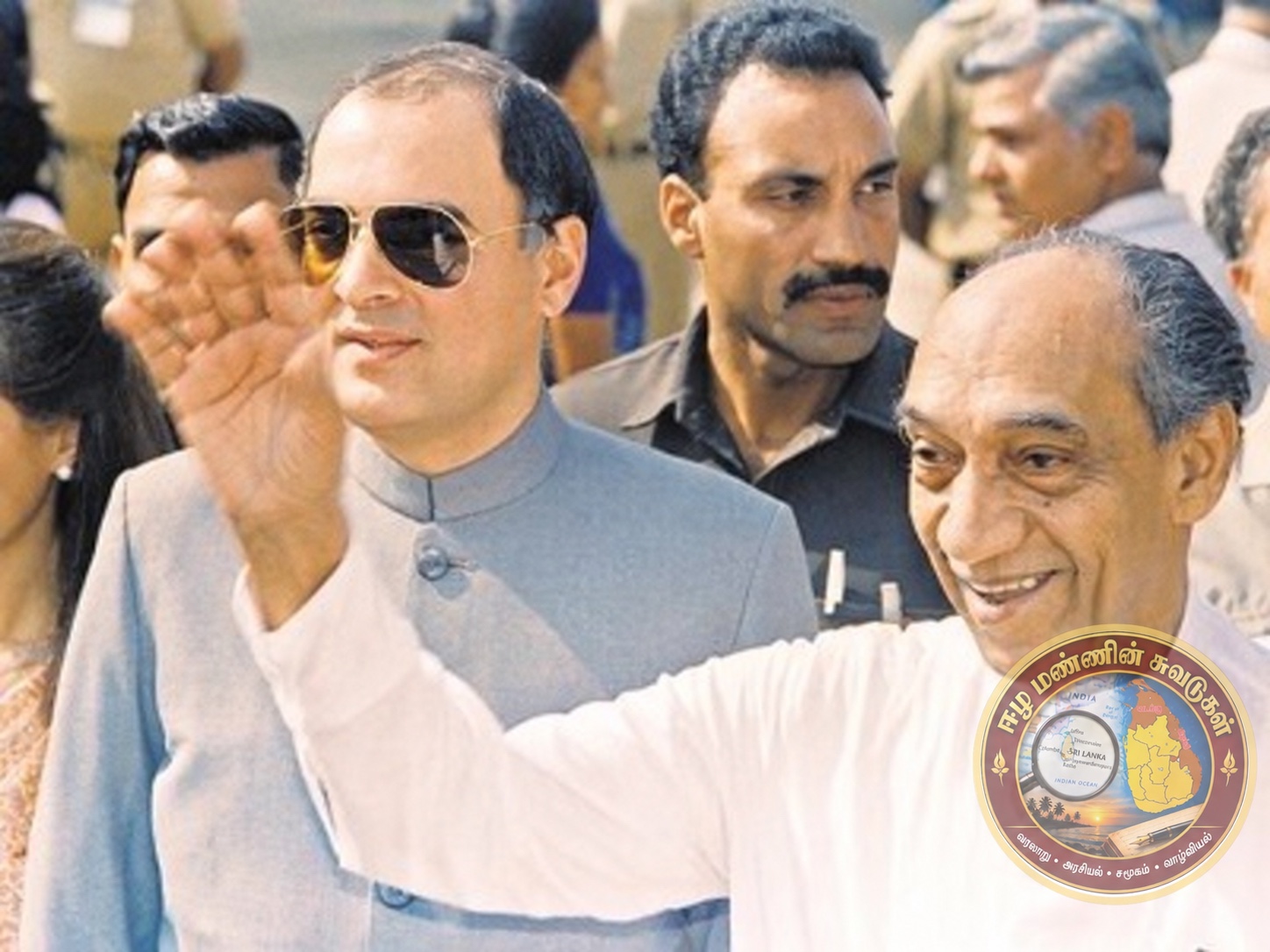
On 29 July 1987, the Indo–Sri Lanka Accord was signed between Indian Prime Minister Rajiv Gandhi and Sri Lankan President J. R. Jayewardene.
The Indian Peace Keeping Force was subsequently sent to Sri Lanka.
Initially arriving with the stated purpose of establishing peace, Indian troops engaged in efforts to have Tamil armed movements hand over their weapons.
However, while the Sri Lankan government evaded implementing the provisions accepted under the Indo–Sri Lanka Accord, the Indian government, which had undertaken responsibility for implementing it, failed to hold the Sri Lankan government to account and take appropriate action. This became a principal cause of the escalating differences between the LTTE and the Indian government.
In particular, Thileepan, who undertook a hunger strike demanding the fulfilment of obligations under the Indo–Sri Lanka Accord, died on 26 September 1987. Subsequently, 12 LTTE members, including Kumarappa and Pulendran, who had been arrested by the Sri Lankan Navy, died after consuming poison on 5 October 1987 at the Palaly military camp, which was under the control of the Indian Peace Keeping Force. These events completely shattered the LTTE’s trust in the Indian government.
The Indian government should have prevented the Sri Lankan government’s violations of the accord and ensured that the promises made to the Tamil people were fulfilled. Its failure to secure an appropriate resolution in these two incidents intensified the differences between the Tigers and the Indian government.
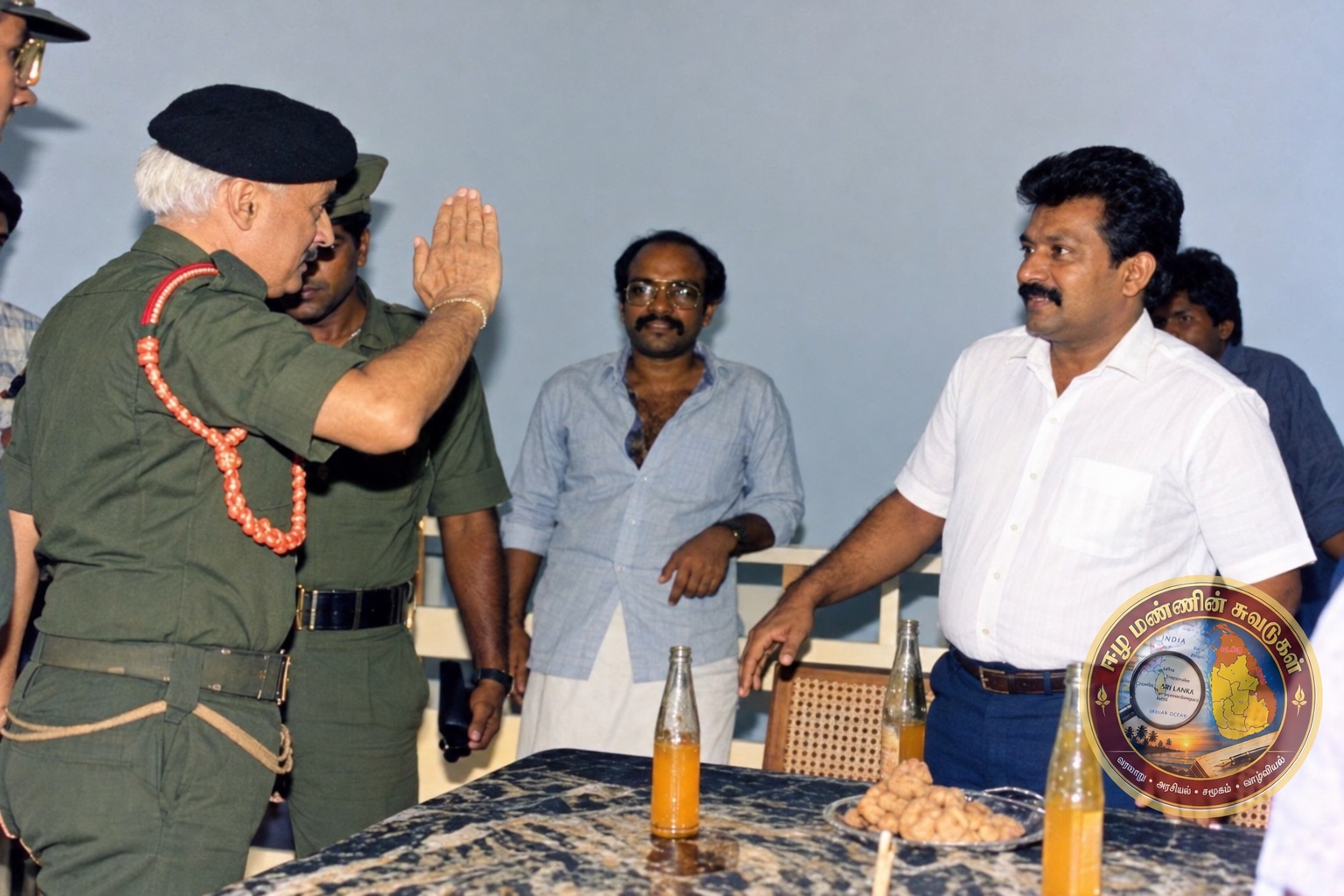
As a result, following the Indian Army’s launch of a major military operation called ‘Operation Pawan’, direct armed clashes began between the Indian Peace Keeping Force and the LTTE in early October 1987.
As one of Operation Pawan’s major objectives, Indian commanders planned to capture LTTE leader Velupillai Prabhakaran, believing that this would allow them to bring the military operation to seize Jaffna to a swift conclusion.
Accordingly, in the early hours of 12 October 1987, 120 soldiers from the Indian Army’s 10th Para Commando unit and approximately 360 soldiers from the 13th Sikh Light Infantry were assigned to carry out a surprise encirclement of the leader’s residence on Pirambadi Road in Kokkuvil and arrest him.
The first stage of the plan was to use four Indian Air Force Mi-8 helicopters to land Indian troops in several waves.
Under this plan, the Para Commandos landing first were to take control of the Jaffna University sports ground. The Sikh soldiers landing subsequently were to secure the area and facilitate the arrival of the remaining troops.
However, the situation on the ground did not develop as the Indian Army had expected.
By intercepting Indian military radio communications, the LTTE had learned of the landing operation in advance and prepared to meet the assault successfully.
The Heavy Losses Suffered by Indian Troops at Jaffna University
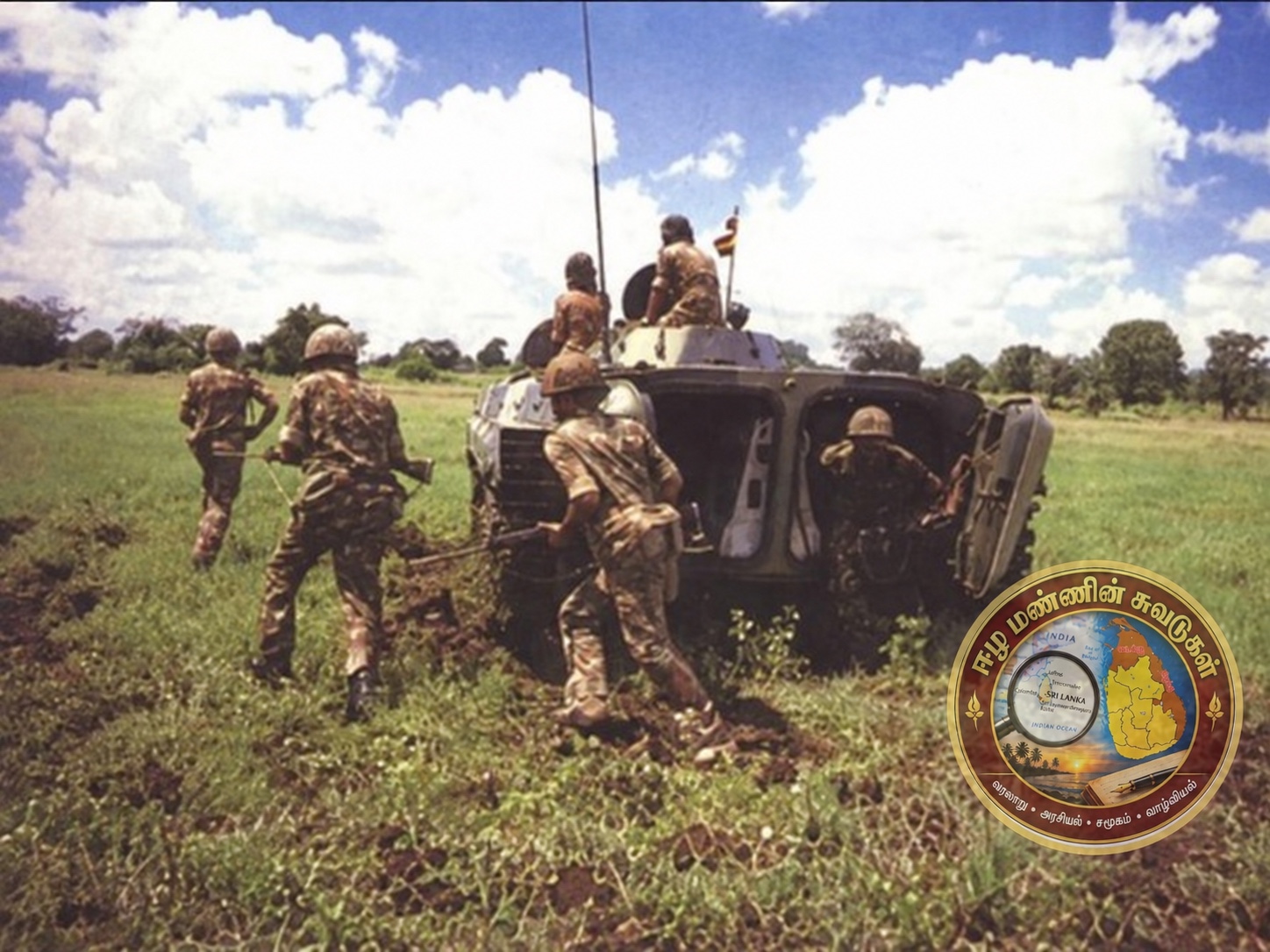
When Indian helicopters approached the university campus in the early hours of 12 October 1987, armed LTTE fighters stationed in the area opened heavy fire on the Para Commandos landing in the first wave and also damaged the helicopters.
This prevented the Indian military command from bringing in all the troops as planned. Nevertheless, a total of 120 Para Commandos and 30 soldiers from the 13th Sikh Light Infantry were landed.
Major Birendra Singh commanded the 30 Sikh soldiers, with Subedar Sampuran Singh also sent to lead them as Platoon Commander.
Shortly after landing, the Sikh unit’s radio operator was killed by LTTE gunfire, causing serious difficulties in communicating directly with its headquarters.
Helicopter flights bringing additional troops were also halted.
Consequently, the 30 Sikh soldiers under Major Birendra Singh had to face the LTTE’s attacks without the reinforcements they had expected.
On the morning of the 12th, 29 soldiers, including Major Birendra Singh and Subedar Sampuran Singh, were killed, while Gora Singh was captured alive by the LTTE.
Meanwhile, several soldiers from the Para Commando unit, which had landed in another part of the battlefield, were also killed.
Thus, the operation launched by the Indian military command to capture the LTTE leadership inflicted heavy casualties on Indian troops and stalled without achieving its principal objective.
Indian Armour Advances Along the Railway Tracks!
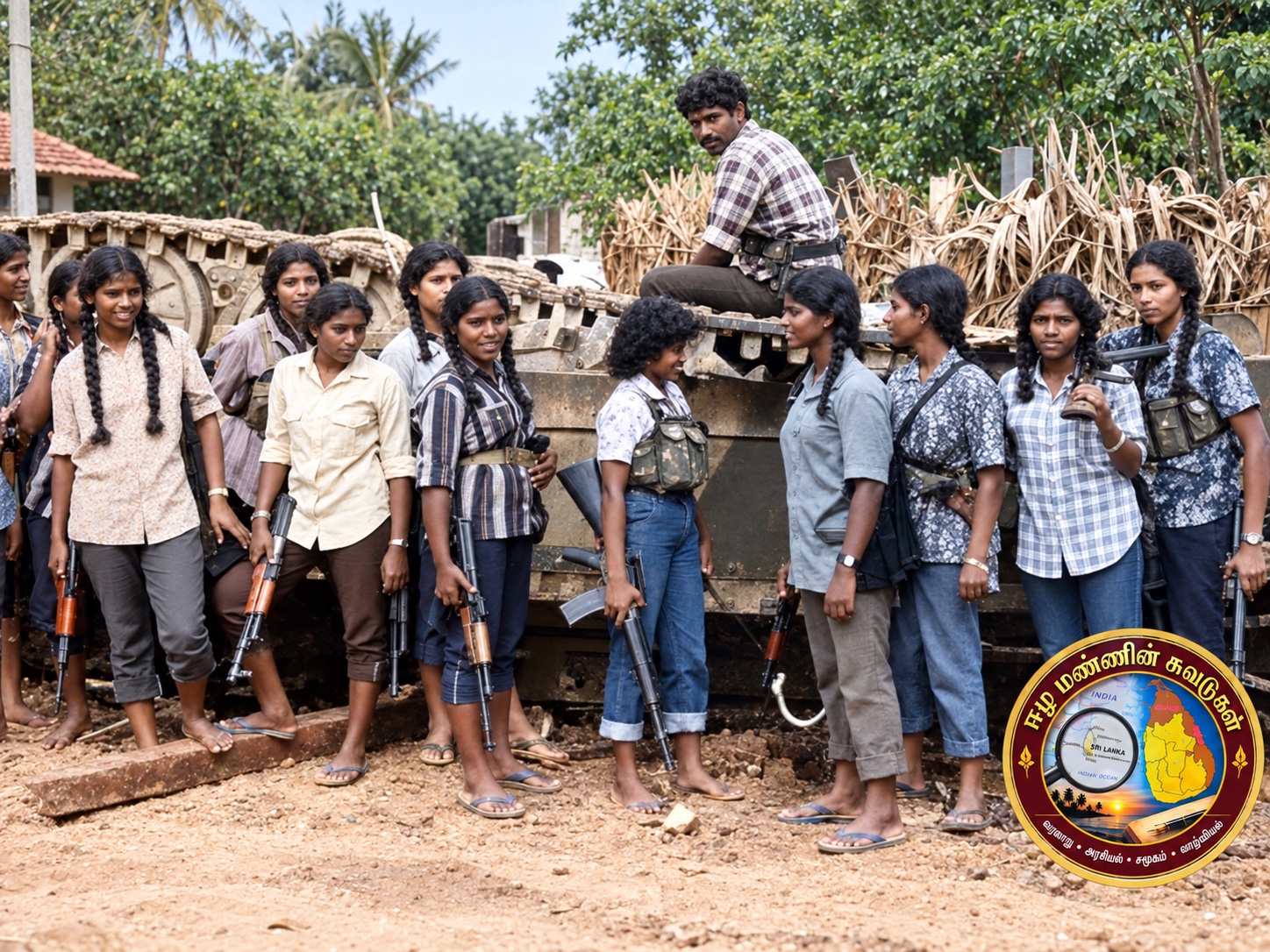
After the 13th Sikh Light Infantry detachment that had landed on the Jaffna University campus suffered devastating losses, the Indian Army began a ground rescue operation to retrieve the Indian Para Commandos trapped under LTTE attacks.
A rescue force was sent from Palaly under Lieutenant Colonel Dalvir Singh, commanding officer of the Indian Army’s 10th Para Commando unit.
Three T-72 tanks from the Indian Army’s 65th Armoured Regiment accompanied them. Major Anil Kaul was responsible for these armoured vehicles.
However, because the LTTE had planted landmines and explosives on the roads leading to Jaffna University, the Indian armoured force could not advance along its planned routes.
An alternative plan was therefore adopted to move the tanks along the railway tracks running from Palaly towards Jaffna.
The three tanks advanced along the railway tracks that passed behind Jaffna University.
As the Indian Army’s armoured vehicles attempted to approach the university by this route, they came under heavy LTTE attacks.
A rocket fired by the LTTE struck the upper part of the tank in which Major Anil Kaul was travelling.
The attack severed one of Major Anil Kaul’s fingers and wounded his eye and arms.
Nevertheless, the Indian armoured force continued its advance. The 4th Battalion of the Indian Army’s 5th Gorkha Rifles and the remaining soldiers of the 13th Sikh Light Infantry joined them in this rescue operation.
Through this operation, the Indian Army rescued the Para Commandos trapped in the Jaffna University area.
However, enraged by the heavy casualties and military setback in the confrontation they had forcibly imposed on the LTTE, Indian troops turned their anger against innocent, unarmed Tamil people.
Civilian Massacres in Kokkuvil–Pirambadi and Porpathi Road!
Indian troops advancing from the Palaly military camp towards Jaffna surrounded the Pirambadi Road area with armoured vehicles and opened fire on civilians inside their homes.
Forty civilians, including women, children and elderly people, were killed in this attack.
At the same time, a section of the 13th Sikh Light Infantry arriving by land surrounded the Porpathi Road area.
They detained civilians living in the area and took them near a community building north of the Kokkuvil Pillayar temple.
They ordered the civilians to lie on the road and drove heavy military vehicles over them, massacring 64 Tamil people.
In other words, more than a hundred Tamil people were killed in the merciless and brutal attacks carried out by the Indian Army in the Pirambadi and Porpathi Road areas.
The eyewitness testimonies recorded about these events are even more shocking.
Eyewitness Testimonies About the Massacres
In an affidavit given to a human rights organisation, Dakshinamurthy Sivarajalingam of Porpathi Road recorded the atrocities suffered by his brother’s family.
He stated that his brother Thavarajalingam, who lived on Pirambadi Road in Kokkuvil, his wife Kanagamalar and their 18-month-old daughter Dharmika were found dead.
His testimony states that when he went to the house the following morning, he found the family members’ bodies. Some boys who had hidden inside the house were found alive with injuries.
Similarly, Nagalingam Nageswari described in her testimony what happened when Indian troops entered her home compound in the early morning.
She stated that her brother and his six-year-old son Manoharan were killed when the troops opened fire there.
The testimony also records that other members of her family were injured.
The killing of a father and a six-year-old boy is one example of the suffering civilians faced in the attacks that day.
The Atrocities Suffered by Tamil People Who Had Welcomed India
The attacks by Indian troops on innocent Tamil people who loved India and had welcomed the Indian Army with garlands, in retaliation for the heavy military losses they suffered in the confrontation they themselves had forced upon the LTTE, will remain indelible scars in Tamil history.
Indian policymakers should understand this and, as a measure of atonement, exert diplomatic pressure on the Sri Lankan government to secure the democratic rights of Eelam Tamils.
Doing so would provide an impetus to win the hearts not only of Tamils at the southern tip of India, but also of Tamils around the world.
Humane Indians should reflect on the fact that the killing of Tamil women, children and elderly people in the very operations of the Indian Peace Keeping Force, which claimed to have come to establish peace, is a stain on India.
Questions That History Raises Even After 39 Years!
The 1987 confrontation at Jaffna University continues to be remembered in Indian military history nearly four decades later.
But how much space has the history of the innocent Tamil civilians killed in Kokkuvil–Pirambadi and Porpathi Road during the period connected with that same confrontation received in India’s mainstream military commemorations?
I place this question before you, the people of India, who continue to speak of sin, virtue, dharma and adharma in the language of Vedanta.
From that starting point initiated by the Indian Army at Kokkuvil–Pirambadi to the final end at Mullivaikkal, justice continues to elude the people affected by the killing of several hundred thousand innocent Tamils.
The killing of civilians, displacement of people and damage to residential areas during the Indian Peace Keeping Force’s military operations in Jaffna in October 1987 also remain important parts of the history of the Eelam war.
In particular, the massacres of civilians and medical staff at Jaffna Teaching Hospital on the 21st and 22nd of the same month have been recorded in separate historical documents.
The Kokkuvil–Pirambadi civilian massacre also occupies an important place in that record.
We cannot simply record the Jaffna University confrontation of 11–12 October 1987 as an Indian Army defeat and an LTTE military success and move on.
For the atrocities suffered by unarmed Tamil people also lie behind that confrontation.
The killing of 29 of the Indian Army’s 30 Sikh soldiers and the capture of the sole survivor represent one side of the confrontation.
The massacre of innocent Tamil people in Kokkuvil, amid the tension created by those military losses and the resistance Indian troops encountered in Jaffna, represents its other side.
Human Suffering That Must Be Discussed Beyond Military Victories and Defeats!
Recording history does not mean recounting only one side’s military victory or the other side’s defeat.
It means documenting with evidence why an event occurred, how it occurred, who took part, who died and the human suffering concealed behind it.
The military honours and commemorations accorded in India to the Indian Army’s fallen soldiers have a place in history.
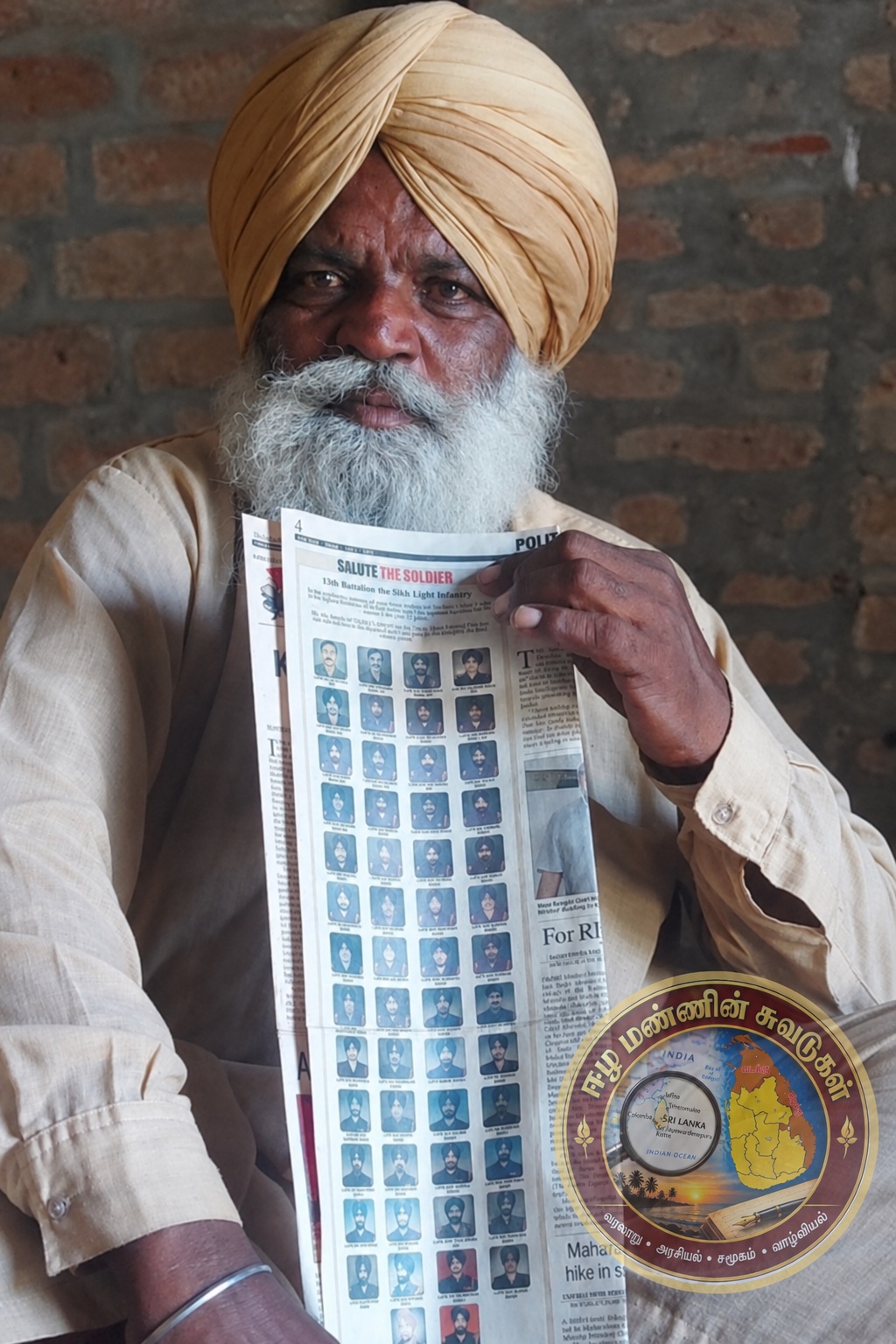
Similarly, the names of the innocent Tamil civilians killed in Kokkuvil–Pirambadi and their families’ testimonies must be preserved in history.
Even after 39 years, the Jaffna University confrontation and the Kokkuvil–Pirambadi civilian massacre remain important, interconnected events in Eelam history.
Beyond the history of the two armed forces that fought that day, we must also speak of the history of innocent Tamil people who bore no weapons and lost their lives simply because they were living in their homes.
Giving their deaths and testimonies their rightful place and bringing to light the full truth about those events are important duties of historical documentation.
For this reason, I will continue my effort to document forgotten histories for future generations on my website, Eelam Mannin Suvadugal.
Swami Shankarananthaa🙏
Reader Comments
Loading comments…