EELAM HISTORY · RESEARCH SERIES
Introduction and Background | 1948–1956: From the Loss of Citizenship to the Language Rights Satyagraha – The Early Years of Ceylon Tamils’ Nonviolent Struggle
When Ceylon gained independence from British rule in 1948, there was an expectation that freedom would usher in an era of equal political rights for everyone on the island. But some laws and political decisions enacted after independence, particularly those affecting the citizenship and voting rights of Hill Country Tamils, set Tamil politics on a new path of opposition. Historical studies record that a large proportion of Tamils of Indian origin lost citizenship and political rights as a result of the citizenship laws of 1948–49.
The Citizenship Question of Hill Country Tamils
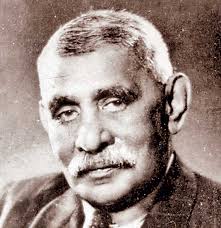
Within months of independence, under the United National Party government led by Prime Minister D. S. Senanayake, the Ceylon Citizenship Act No. 18 of 1948 was enacted and came into force on November 15, 1948.
The stringent conditions concerning descent and registration made it difficult for most Tamils of Indian origin, who had lived and worked on the island's hill country plantations for generations, to prove that they met the new citizenship requirements.
The Indian and Pakistani Residents (Citizenship) Act of 1949 then provided a route for long-term residents of Indian and Pakistani origin to obtain citizenship by registration. In practice, however, its eligibility requirements did not immediately make most Hill Country Tamils citizens.
Electoral laws were also changed. Because citizenship became a key requirement for voter registration, many Hill Country Tamils who could not meet the new conditions lost their voting rights. The electoral influence of a large labour community that had gained political representation in the 1947 election was sharply reduced.
This was more than a legal issue. For people whose work had sustained Ceylon's tea plantation economy for generations, it became a fundamental question of belonging, political representation and identity as citizens.
Differences Within the Tamil Congress
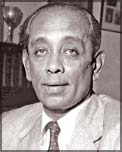
At the time, the All Ceylon Tamil Congress, led by G. G. Ponnambalam, was a major political organization of Ceylon Tamils.
One of its leading figures was S. J. V. Chelvanayakam, who later became known to Tamils as “Thanthai Chelva.”
After independence, the Tamil Congress under Ponnambalam worked with the government led by D. S. Senanayake. Differences arose within the party over Hill Country Tamil citizenship, its relationship with the government and the political future of Tamils. Those disagreements led Chelvanayakam, C. Vanniasingam, E. M. V. Naganathan and others to form a separate political movement.
A historical distinction matters here.
Rather than simply saying that Chelvanayakam left the Tamil Congress, it is more accurate to say that political and policy differences led him and his supporters to split from it and form a new party.
1949 – The Formation of Ilankai Tamil Arasu Kachchi
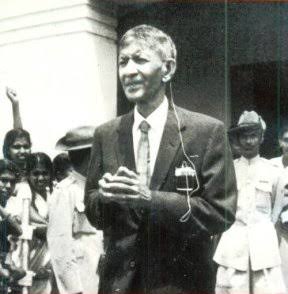
Ilankai Tamil Arasu Kachchi (ITAK) was founded on December 18, 1949.
Chelvanayakam was its founding leader. In English, it was commonly known as the Federal Party. The party's official history also records its founding by Chelvanayakam and other Tamil leaders on December 18, 1949.
The new party put the political rights of Tamil-speaking people, regional autonomy, language rights and equality of citizenship at the centre of its demands.
Chelvanayakam, in particular, held that the political struggle should proceed through nonviolence. Satyagraha, civil disobedience and peaceful public protests later became key methods of the Federal Party. His political legacy is closely associated with nonviolent struggle.
The Language Question Intensifies
Language assumed a central place in political debate after independence.
English had been the language of administration under British rule. After independence, the demand to give Sinhala precedence in government administration gathered strength in Sinhalese politics.
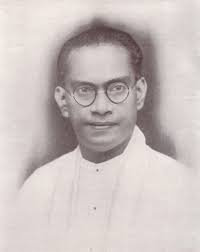
The political alliance led by S. W. R. D. Bandaranaike won the 1956 general election. Making Sinhala the country's sole official language was a major promise of his election campaign.
The Official Language Act No. 33 of 1956, commonly called the “Sinhala Only Act,” was subsequently introduced. The official legislative record of Ceylon identifies it as the Official Language Act No. 33 of 1956.
June 5, 1956 – Nonviolent Protest at Galle Face
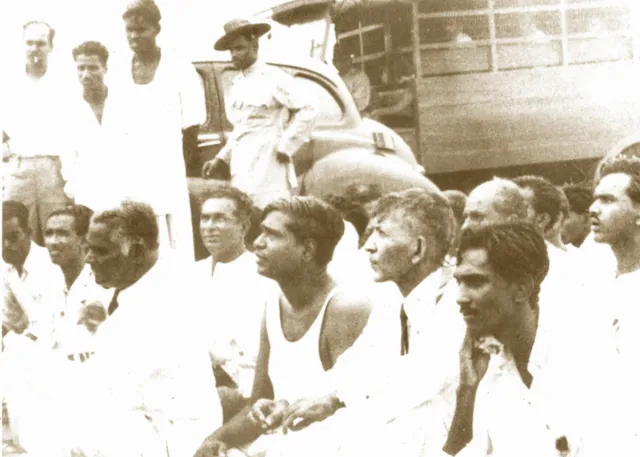
When the language bill was taken up in Parliament on June 5, 1956, the Federal Party led by Chelvanayakam held a satyagraha against it at Galle Face in Colombo.
Party members, parliamentarians and supporters from the North and East sat there in peaceful protest.
Their principal demand was that Tamil also be given a fair place in government administration.
It was a sit-in based on Gandhian nonviolence. The Galle Face satyagraha of June 5, 1956, was subsequently remembered as a significant event in the history of Ceylon Tamils' nonviolent political struggle.
Violence Against a Peaceful Protest
However, opponents attacked the satyagrahis who were sitting peacefully at Galle Face.
Some participants were assaulted and injured.
The tension that began at Galle Face did not end there.
In the following days, attacks, arson and killings targeting Tamils took place in several parts of the country. Historical studies describe the violence of 1956 as a major turning point in the island's ethnic relations.
Peaceful Opposition in the North and East
Tamil opposition was not confined to Galle Face in Colombo.
Peaceful demonstrations, shop closures, black flag protests, prayers and satyagrahas against the language legislation also took place in northern and eastern areas, including Jaffna, Trincomalee and Batticaloa.
Language rights thus grew beyond a demand made by political leaders into a social and political movement among Tamils.
From around 1956, the Federal Party began to pursue satyagraha and civil disobedience as more organized methods of nonviolent political protest.
From Citizenship to Language Rights
Looking at the eight years from 1948 to 1956 shows how the political struggle of Ceylon Tamils developed step by step.
First came the question of citizenship and voting rights for Hill Country Tamils.
Political and policy differences then arose within the Tamil Congress.
Those differences led to the founding of Ilankai Tamil Arasu Kachchi under Chelvanayakam in 1949.
In the mid-1950s, Sinhalese political activists mobilized support for the “Sinhala Only” demand,
F. R. Jayasuriya went on a hunger strike on May 24, 1956,
and Meththananda addressed Sinhalese audiences.
Through these developments, language rights became a major political issue.
Finally, after S. W. R. D. Bandaranaike presented the Sinhala Only bill to the House of Representatives on June 5, 1956, the Galle Face satyagraha became an important symbol of the nonviolent public struggle for Tamil language and political rights.
The 1956 satyagraha therefore cannot be seen as an isolated event.
Behind it were the citizenship question that began in 1948, the loss of political rights by Hill Country Tamils, the split within the Tamil Congress, the emergence of the Federal Party and growing disagreements over language equality.
The Opening Chapter of Nonviolent Politics
The period from 1948 to 1956 is an essential opening chapter for understanding the Tamil national politics that continued for decades.
Tamil political leaders of the period first emphasized parliamentary action, negotiation, satyagraha and civil disobedience as nonviolent political methods.
The 1956 Galle Face satyagraha is recorded in history as a major public protest along that path.
Through the rest of the 1950s and into the 1960s, Tamil political movements continued nonviolent protests demanding language rights, regional power sharing and equality in government administration.
What began as a conflict over citizenship in 1948 expanded into a struggle over language rights in 1956. It laid the foundation for many subsequent chapters of Ceylon Tamil political history.
Reader Comments
Loading comments…