ARTICLES
The Politics of ‘Removing the Tiger’ and the Politics of ‘Erasing Memory’

Opinion article | Parani Krishnarajani
The Sinhala political establishment says it has completely destroyed the Tigers. Why, seventeen years later, does it still seek to prevent people from speaking, writing and singing about them, and from remembering them?
The answer to this question is very simple.
Justice for us must be denied. To that end, a politics of “removing the Tiger” must be pursued.
For this politics to advance, a politics of “erasing memory” must be pursued alongside it.
What is the politics of “erasing memory”?
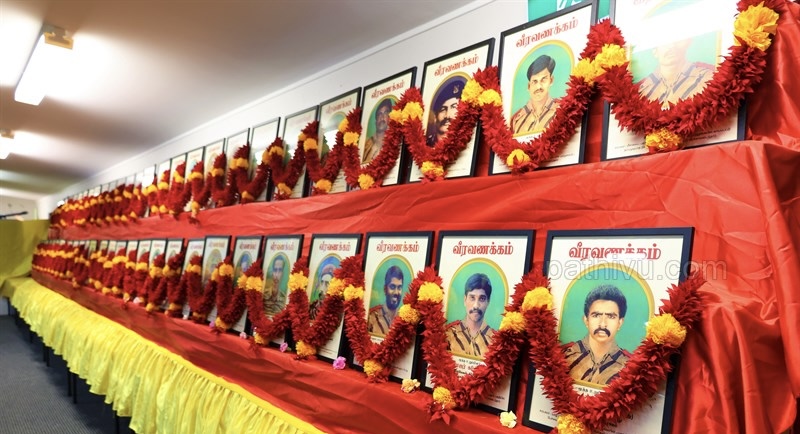
Put simply, it is an attempt to remove from collective memory the three decades of political and social life of Tamil Eelam as a de facto state.
The politics of “removing the Tiger” is one part of that broader political project.
A section of our own society has also come under the influence of this political approach, knowingly or unknowingly.
This article argues that, in order to bury our quest for justice completely, the idea of the “Tigers” and the political philosophies surrounding them are now being removed from the Tamil political sphere through the politics of “erasing memory.”
That is what we mean by the politics of “removing the Tiger.”
Is only an organization being erased?
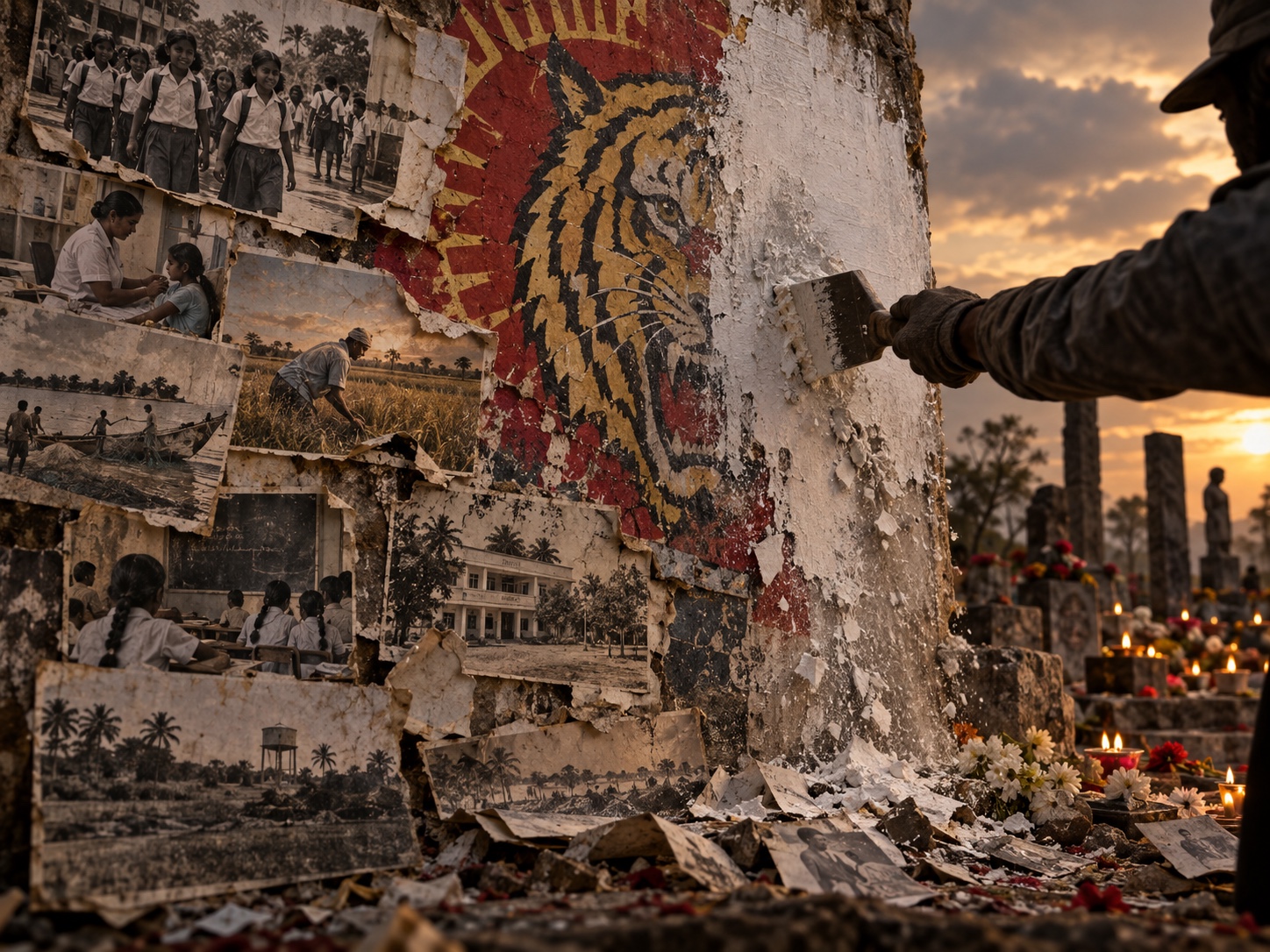
The argument advanced here is that “removing the Tiger” erases more than the memory of an organization called the “Tigers”; with it, a historical part of the idea of the Tamil nation is also erased.
This is seen as its dangerous political background.
Keeping the word “Tiger” as a symbol within Tamil political discourse is not an effort to revive armed struggle.
Rather, it is seen as a historical and political response to the politics of “erasing memory,” and as an effort to preserve our people’s political substance and historical memory.
The memory of a de facto state

The Tigers are not merely a matter of organizational argument.
They are also seen as a symbol of the political and philosophical memory of the “de facto state” experienced by some Tamil people over three decades.
That historical period is linked to an idea of nationhood, a claim to self-determination and a political debate about justice.
This article regards any approach that seeks to destroy that memory and its political meaning entirely as being in conflict with Tamil national political memory.
Why is this politics of “removing the Tiger” opposed?

Here is a simple explanation of why some insist that the politics of “removing the Tiger” must continue to be opposed.
The Prevention of Terrorism Act and other legal and security practices remain central to many debates concerning Tamil political memory, commemoration and expression.
This article argues that the underlying purpose of these restrictions is not merely fear that the Tigers might reappear; it is also to continue controlling questions concerning Tamil justice, political rights and historical memory.
This political context must first be understood.
Without that understanding, any account of Tamil politics after 2009, and any discussion of its next stages, will be incomplete.
The seventeen years since 2009 stand as evidence that memory, justice, political rights and historical narrative remain unresolved questions.
The debate around the political symbol of the “Tiger,” therefore, is not only a debate about an organization’s past.
It is an ongoing political debate about memory, justice, national identity and historical rights.
Parani Krishnarajani
Reader Comments
Loading comments…