
HISTORY OF THE EELAM STRUGGLE · EDITORIAL
1987 – The Attack on the Pannai Viduthi Mini Camp in Jaffna
The military situation in the Jaffna Peninsula at the beginning of 1987
In the early part of 1987, when the Jaffna Peninsula had no other movements and was entirely a territory under the Tigers' control,
the Tiger units there kept the Sinhala military confined to its many camps at Palaly, Kankesanthurai, Karainagar, the Fort, Navatkuli, Point Pedro and Valvettithurai, unable to come out and advance.
The Tiger units of that time had immobilized the Sinhala military.
In this situation, unable to advance through the Jaffna Peninsula and pushed into immobility by its successive defeats, the Sinhala military
tried to establish mini camps near its main camps to protect them.
The Sinhala military confined within the Fort camps in Jaffna town likewise
found itself immobilized.
To counterbalance its setbacks
and strengthen its supply and security network,
it set out from its Fort camp to make that effort.
As one part of this effort,
on 7 January 1987, the Sinhala military sought to link its Jaffna Fort camp and Mandaitivu camp
through an intermediate point for its supply needs.
It moved to seize places such as Pannai Viduthi and the telecommunications station and establish mini camps there.
To stop this military advance,
the Tigers launched a counterattack.
Although Farook, whose name was Ahmed Lebbe Mohamed Haneefa and who came from Akkaraipattu village in Ampara district, and
Seelan, whose name was Thangaiya Sivakumar, died as LTTE martyrs,
the military captured the places it had targeted, including Pannai Viduthi and the telecommunications station.
The attempt to attack the Navatkuli camp and the unexpected explosion:
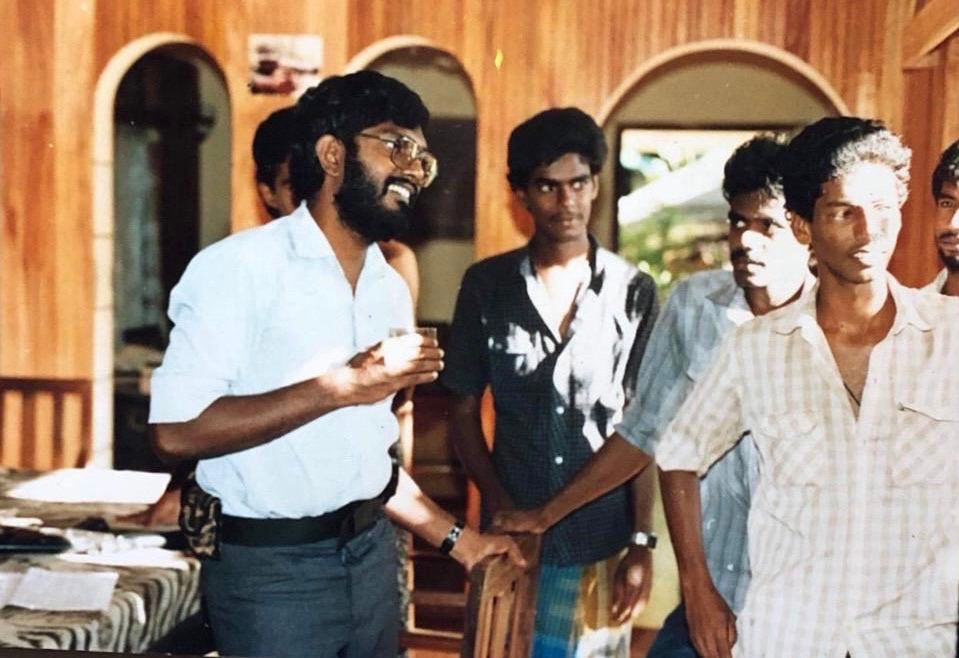
The Tigers needed to destroy those mini camps and drive the military back to its former positions.
First, however, as they had already planned,
they acted on the reconnaissance information gathered for an attack on the Navatkuli military camp,
one of the camps held in check in Jaffna district.
Their aim was to attack and destroy the Navatkuli camp in the Chavakachcheri area.
Under the leadership of Arputhan, known as Ponnamman, one of the Tigers' senior members,
the Tiger attack force was due to set out on 14 February 1987.
But an unexpected, accidental explosion occurred,
and Arputhan, or Ponnamman, who was to lead the attack,
was among ten LTTE fighters who died as martyrs.
The attack therefore did not take place.
Even so, the Sri Lankan military learned the full details of the attempted attack.
Fearing that the Tigers could attack them at any time,
the military personnel in every camp they occupied in Jaffna district
remained prepared for a counterattack.
Likewise, the Pannai Viduthi mini camp, expanded by the military from the Fort,
was reinforced, with police and soldiers stationed there in strength.
Planning the attack on the Pannai Viduthi mini camp
The leader had returned to the homeland:
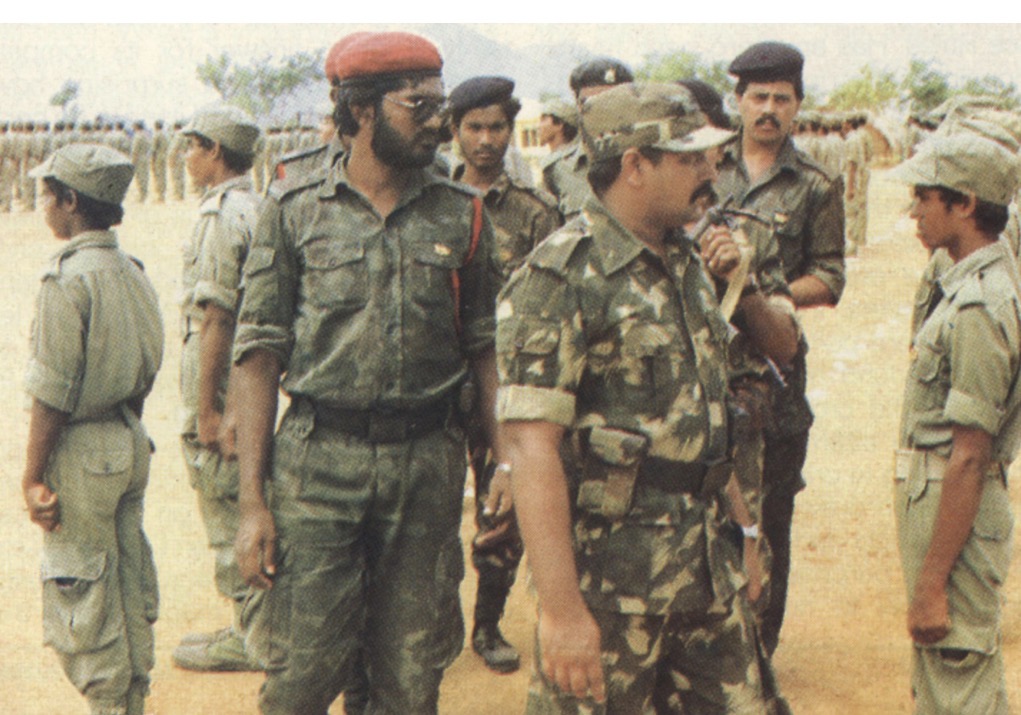
The national leader returned to the Tamil Eelam homeland on 5 January 1987.
During the period when he was staying in Jaffna district, then a territory under the Tigers' control,
the LTTE's Jaffna district commander, Kittu, whose name was Sathasivam Krishnakumar,
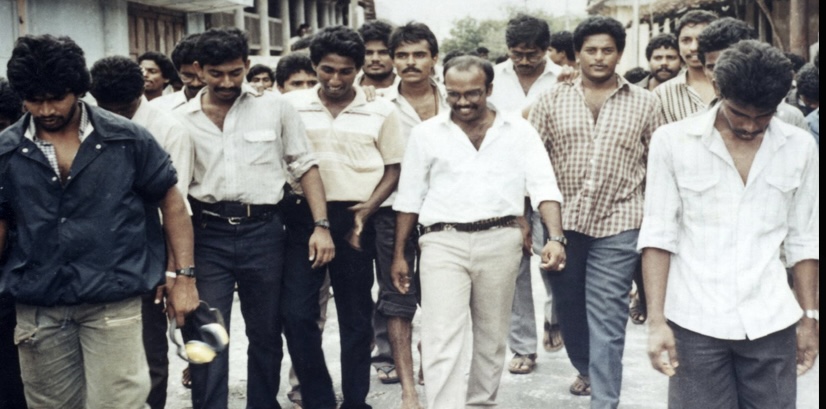
decided to destroy the Pannai Viduthi mini camp, a militarily important location in Jaffna town.
Full responsibility for the attack, however, was entrusted to Radha, whose name was Kanagasabapathy Harichandra and who was then the Mannar district commander.
To plan and carry out the attack properly,
commander Radha drew on energetic young Tigers who were guarding defensive positions around Jaffna Fort.
He sent Kirmaani, Katta Mohan, Sethu, Keith, Rasa and others to infiltrate the area around the camp and gather the information needed for the attack.
23 March 1987 – The rapid assault on the Pannai Viduthi mini camp:
At approximately 1:20 a.m. on 23 March 1987,
under the coordination of Jaffna district commander Kittu
and the direction of commander Radha's orders,
the Tigers mounted a swift assault on the Pannai Viduthi mini camp
from three directions.
The attack was planned so that Tigers would advance from Kottadi, the area adjoining the Fort and the seashore.
From Kottadi, several fighters, including Kirmaani, Chandran, Sevvel and Arunan, advanced under senior fighter Madan.
At the same time, a special team of fewer than twenty fighters led by Bharath penetrated the camp from the area adjoining the Fort and from the shore.
They carried out a direct, rapid assault.
Ajith of the leader's personal security team, along with Katta Mohan, Rasa, Venthan Prabhu, Irupalai Iyer, Sethu, Mannar Iyer, Mohan Ram and Keith Kirupan, joined the team and acted bravely.
They captured three Sinhala police constables: Upasantha Gunatilaka, Palitha Karunatilaka and Amarasena.
They also captured five soldiers: Sri Mora, Chandra Sri, Pakkamiveva, Upevanse and Thilakkumara.
The Tigers thus captured a total of eight security personnel.
Bharath, who led one side of this capture, and Irupalai Iyer, who was then at the principal camp known as commander Kittu's “Main,”
as well as Ajith, the leader's bodyguard, and several other fighters, were directly involved.
A tribute to the fighters who died as martyrs
During this successful rapid assault,
the LTTE fighters
Durai, whose name was Mariyampillai Chrisralo,
Arunan, whose name was Sivasubramaniam Ragurajan,
Pandithar, whose name was Ratnasabapathy Venugopal,
and Rajmohan, whose name was Alagakkon Jude Rajkumar,
died as martyrs. I record their names
and pay my tribute to them.
Their sacrifice reminds us of the intensity of the fierce military confrontations in Jaffna at that time and of the price paid in the struggle for control of territory. I wish to make that clear.
Swami Sankarananda🙏
Reader Comments
Loading comments…