ARTICLES · EELAM HISTORY
The Indo–Sri Lanka Accord’s Amnesty and the Twelve LTTE Members Who Died at Palaly
On 29 July 1987, Indian Prime Minister Rajiv Gandhi and Sri Lankan President J. R. Jayewardene signed the Indo–Sri Lanka Accord.
Under paragraph 2.11, the Sri Lankan government agreed in writing to grant a general amnesty not only to those detained, accused or convicted under the Prevention of Terrorism Act and emergency laws, but also to militants.
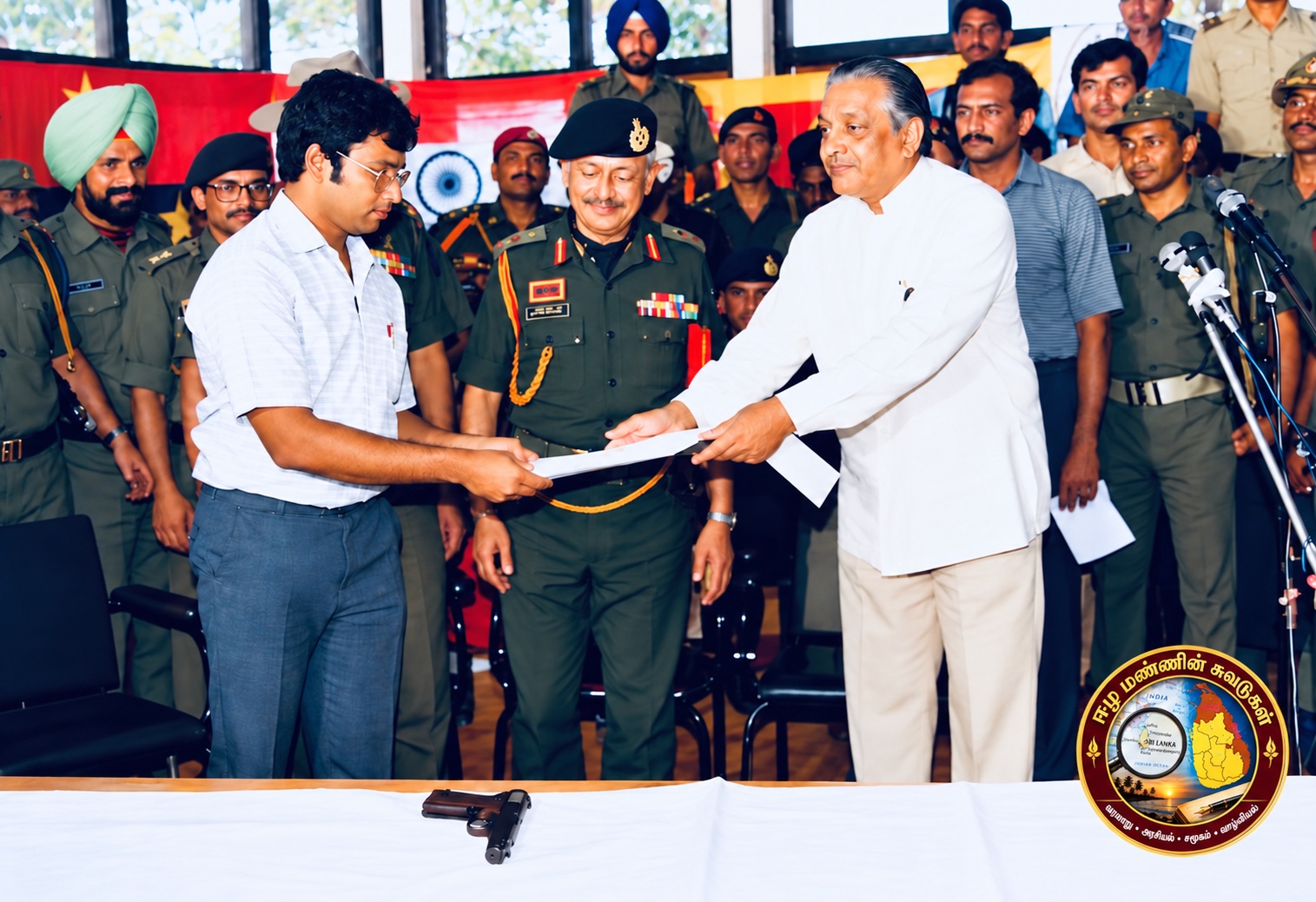
Subsequently, at the weapons handover ceremony held at Palaly on 5 August 1987, Yogaratnam Yogi handed over his pistol on behalf of the Liberation Tigers of Tamil Eelam. General Sepala Attygalle, the defence secretary representing the Sri Lankan government, received it and handed Yogi the government’s official amnesty document.
It was after the weapons handover and amnesty arrangements under the Accord had begun that, two months later, the Palaly incident marked a major turning point in the history of the Tamil Eelam struggle.
Pulendhi Amman and Kumarappa intercepted off Point Pedro
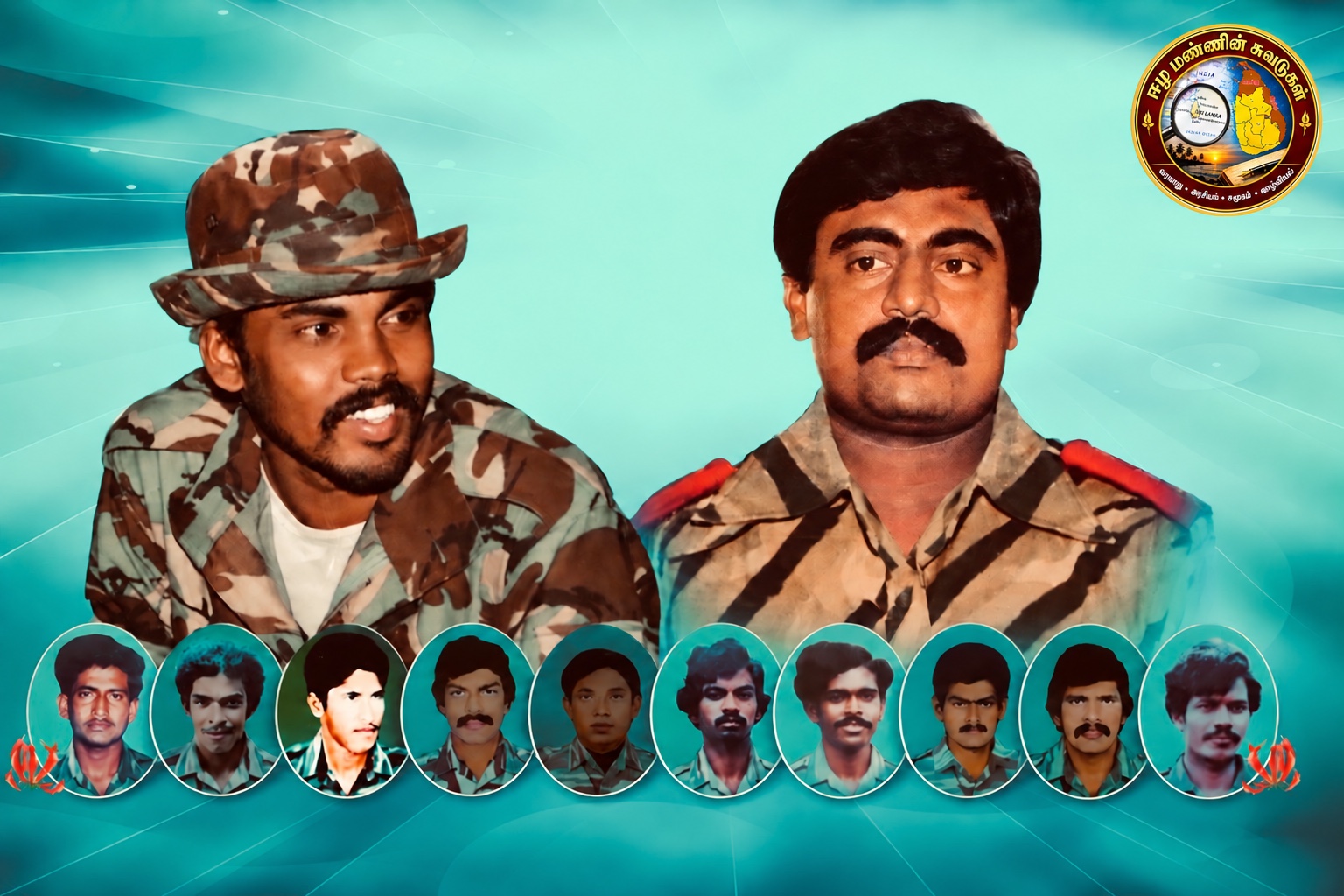
At around two in the morning on 3 October 1987, during the period when the amnesty was in operation, seventeen LTTE members were travelling aboard the boat “Kadalpura” off Point Pedro. They included the movement’s then Trincomalee district commander Pulendhi Amman, whose given name was Gunanayagam Tharmarasa, its Jaffna district commander Kumarappa, whose given name was Balasundaram Ratnapalan, and their bodyguards.
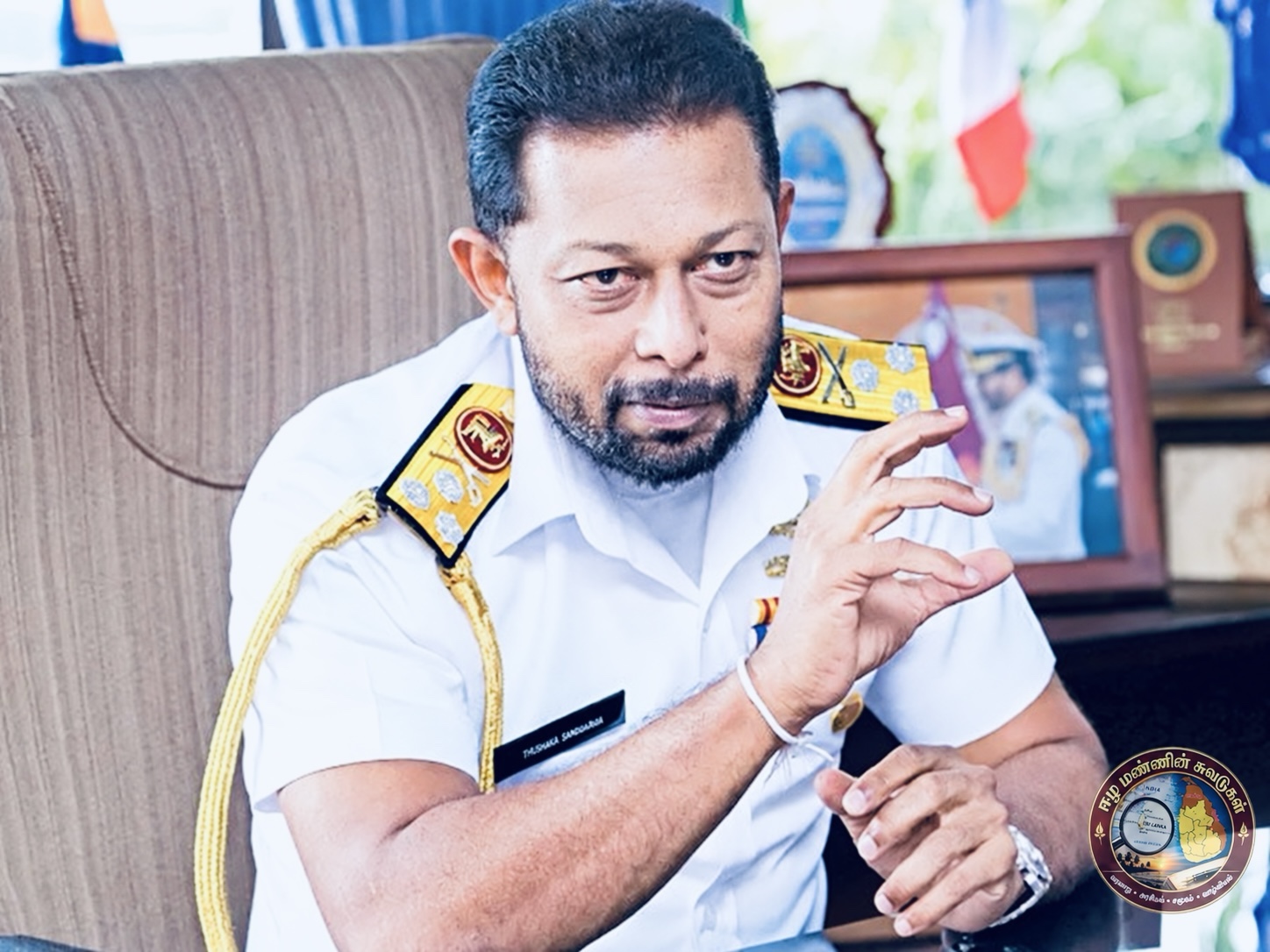
Naval personnel aboard a Dvora patrol boat, led by the Tamil officer Travis Sinniah, intercepted “Kadalpura” and questioned those aboard. Sinniah was born in Kandy on 26 September 1962 and joined the Sri Lanka Navy in 1982.
The LTTE maintained strict organizational discipline. Members were also instructed not to fall into enemy hands alive.
The two commanders and those accompanying them did not fight back or try to escape when intercepted by the Sri Lankan Navy.
The reason was that a ceasefire was then in place and the Indo–Sri Lanka Accord was in operation. Weapons had been handed over and an amnesty had been granted to militants.
They therefore did not consider themselves prisoners of war captured by an enemy. Believing that the Navy was taking them to the Kankesanthurai camp for routine questioning during the Accord period, and also because the naval officer Travis Sinniah was Tamil, they cooperated with the questioning and went with the naval personnel.
Travis Jeremy Liyanduru Sinniah later became commander of the Sri Lanka Navy. On that day, the seventeen LTTE members taken for questioning by the naval personnel under his command were first brought to the Kankesanthurai naval camp and then to the Palaly camp.
Only afterwards did the situation begin to change completely.
The period of their detention was not an ordinary wartime situation.
The Indo–Sri Lanka Accord had been signed.
Weapons surrender had begun.
The Sri Lankan government had agreed to grant an amnesty to militants.
The Indian Peace Keeping Force had also been deployed in the north and east.
In these circumstances, the Sri Lankan government took steps to transfer all seventeen detainees to Colombo for further questioning.
The matter was reported to the then Sri Lankan president, Junius Richard Jayewardene, and defence minister Lalith William Samarasekera Athulathmudali.
Steps were then taken to transfer the seventeen LTTE members detained at Palaly to Colombo.
The detainees, who had cooperated with the Navy believing they were undergoing questioning within the Accord arrangements, began to understand the full seriousness of the situation only when they learned of the attempt to take them to Colombo.
Indian attempts to prevent the transfer
The Sri Lankan military cited paragraph 2.9 of the Indo–Sri Lanka Accord in support of its position. That provision required armed groups to surrender their weapons and explosives. The Sri Lankan side argued that those intercepted at sea had violated it by travelling with weapons.
The LTTE’s position, on the other hand, was that its members could not be arrested and transferred to Colombo because militants had been granted an amnesty under paragraph 2.11, and permission had also been given to retain small arms for self-defence.
In other words, the Sri Lankan side invoked paragraph 2.9 of the same Accord, while the LTTE invoked paragraph 2.11.
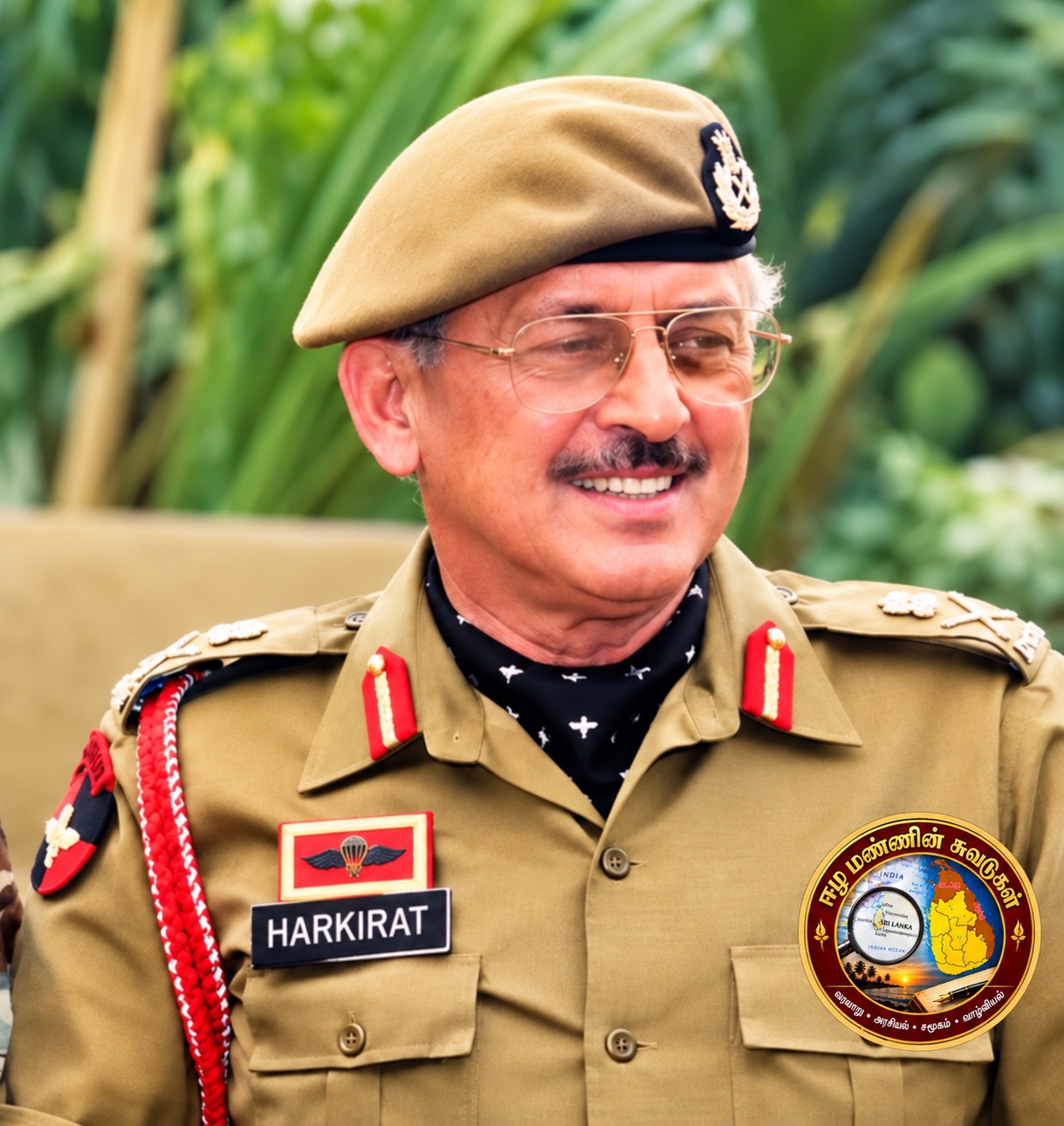
To prevent the transfer, the LTTE contacted Brigadier Fernandez, its liaison with the Indian forces, and Harkirat Singh, who commanded the IPKF’s 54th Infantry Division.
The 54th Infantry Division brought the matter to the attention of senior Indian officials, including the then senior Indian military commander, Dipinder Singh, and India’s high commissioner to Sri Lanka, J. N. Dixit. The Indian military was subsequently instructed to prevent the transfer of the seventeen to Colombo until a final decision was reached.
The Indian military arranged for its doctors to continue checking the detainees’ health and for LTTE representatives led by Mahattaya to meet them. Nevertheless, these efforts did not change the Sri Lankan government’s decision.
An important contradiction arose here.
On the one hand, the Sri Lankan government had agreed through the Indo–Sri Lanka Accord to grant militants a general amnesty and had put that arrangement into effect at the weapons handover ceremony.
On the other, it sought to take those arrested during that amnesty period to Colombo for questioning.
It was in this context that Pulendhi Amman said:
“The Sri Lankan soldiers were arrested during wartime. We were arrested during peacetime.”
That single sentence contained the contradiction of the moment.
Why was Indian protection withdrawn?
Attempts by the Indian military and at the Indian diplomatic level to prevent the transfer of the seventeen detainees at Palaly did not succeed.
An order then came from New Delhi to withdraw the protection the Indian forces had been providing to the seventeen. The Indian personnel stationed around them consequently withdrew.
Their custody then passed entirely under Sri Lankan military control, and preparations to take them to Colombo intensified.
This is where a crucial question concerning India’s role arises.
India was a guarantor of the Indo–Sri Lanka Accord.
The Indian Peace Keeping Force was deployed in the north and east.
The same Accord contained the arrangement to grant an amnesty to militants.
Yet India was unable to prevent the transfer to Colombo of the seventeen arrested while the amnesty was in operation. Ultimately, Indian protection was also withdrawn.
How was that decision made?
Why was that order issued from New Delhi?
Why did India withdraw from the expectation of protection created under the Accord?
These questions cannot be avoided when examining the background to the tragedy that followed at Palaly.
How did the cyanide capsules reach them?
Meanwhile, on the afternoon of 4 October 1987, a Sri Lanka Air Force aircraft landed at Palaly airport to take the seventeen to Colombo the following day.
Only then did the detainees begin to feel that their transfer to Colombo had become unavoidable.
Once they learned that preparations for the transfer were proceeding, the two commanders understood its seriousness.
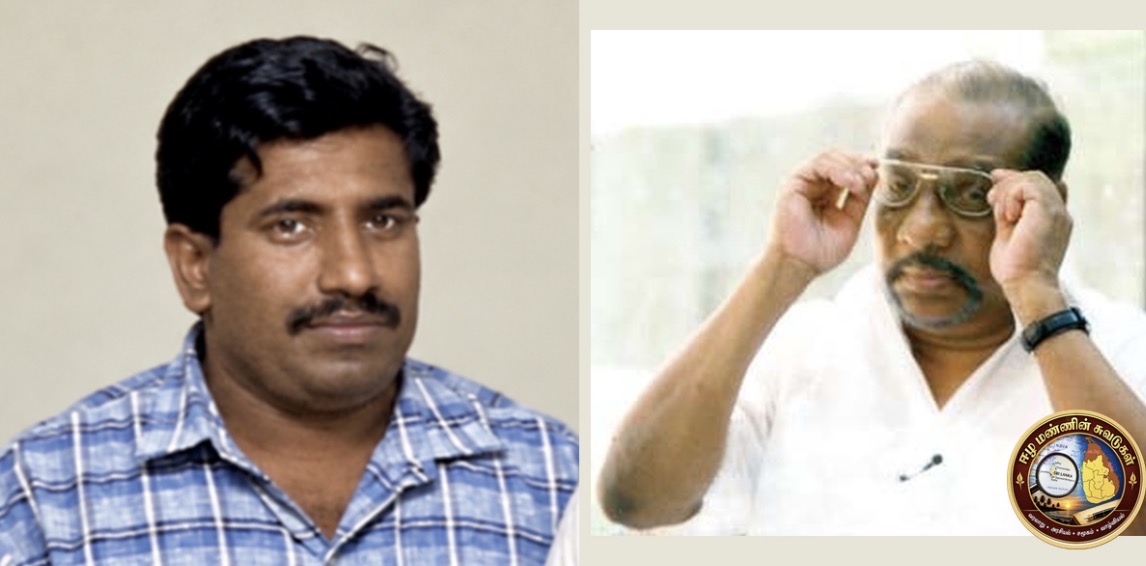
Pulendhi Amman sent a message to LTTE leader Velupillai Prabhakaran asking that cyanide capsules be sent if he and the members detained with him were to be taken to Colombo.
In his letter, Kumarappa also stated that he was prepared to end his life if he was taken to Colombo.
After Prabhakaran accepted their requests, cyanide capsules were collected from members who were near him at the time.
Capsules were obtained from his bodyguards, including Ajith, Gaddafi, Devan and Thiyagu, and from several other members.
The collected capsules were secretly delivered to the seventeen detained at Palaly through Mahattaya, whose given name was Gopalaswamy Mahendrarajah, and Anton Balasingham.
When arrested, they had gone along with the questioning without fighting back, placing their trust in the Accord.
But when faced with being taken to Colombo, the same members felt that this trust had broken down.
Kumarappa conveyed messages for his wife.
Pulendhi Amman also conveyed messages for his family.
Karan thought of his wife and the future of his two children.
That meeting was not an ordinary encounter.
It took place with an awareness of the weight of the decision they were about to make and the possibility that they might never see one another again.
5 October 1987
On 5 October 1987, when an attempt was made to take the seventeen arrested members forcibly to Colombo, they bit the cyanide capsules in their possession.
Eleven died that day.
Captain Raguvappa, whose given name was Rajamanickam Raguman, was taken to hospital after ingesting cyanide and died on 6 October 1987.
The total number of deaths was therefore twelve.
They were:
Jaffna district commander Lieutenant Colonel Kumarappa — Balasundaram Ratnapalan, Valvettithurai, Jaffna.
Trincomalee district commander Lieutenant Colonel Pulendhi Amman — Gunanayagam Tharmarasa, Palaiyootru, Trincomalee.
Major Abdullah — Ganapathipillai Nagulakumar, Chavakachcheri, Jaffna.
Captain Palani — Balasubramaniam Yogendrarasa, Valvettithurai, Jaffna.
Captain Karan — Vaithilingam Manoharan, Chundikkuli, Jaffna.
Captain Mires — Thavaraja Mohanaraja, Valvettithurai, Jaffna.
Captain Nalan — Ganapathipillai Gunendraraja, Point Pedro, Jaffna.
Lieutenant Anpalagan — Thesomayanantham Uthamasigamani, Valvettithurai, Jaffna.
Lieutenant Thavakumar — Somasundaram Packiyaraja, Mulliyan, Jaffna.
Second Lieutenant Reginald — Gabriel Bernard Mariyanayagam, Mulliyan, Jaffna.
Second Lieutenant Ananthakumar — Gnanapragasam Francis Aloysius, Manalkadu, Jaffna.
Captain Raguvappa — Rajamanickam Raguman, Valvettithurai, Jaffna — who was treated in hospital after ingesting cyanide with the others and died on 6 October 1987.
They are remembered as the twelve LTTE members who died at Palaly.
While twelve died, the lives of five — Thameem, Karunanithi, Das, Selva and Sivakumar — were saved despite their having ingested cyanide.
The grief that engulfed Valvettithurai
When news of the events at Palaly on 5 October 1987 reached Valvettithurai, the entire area was plunged into grief.
The names of those who had died were announced one after another.
News of Kumarappa’s death reached his family.
News of Pulendhi Amman’s death reached his family.
The news of the other members’ deaths then reached their families.
The crying and lamentation from individual homes merged, creating an atmosphere in which the whole of Valvettithurai seemed to have become one large house of mourning.
Wives who had lost husbands.
Parents who had lost sons.
Families who had lost brothers.
Children who had lost fathers.
One incident had changed the lives of many families at the same time.
The following day, people continued to visit the homes of those who had died and shared in the families’ sorrow.
Arrangements were made at the Valvettithurai sports ground for a common funeral tribute to the twelve.
The ground filled with people.
People filed past the coffins to pay their final respects.
Family members, including Kumarappa’s wife Rajani, Pulendhi Amman’s wife Suba, and Karan’s wife Guga and their two children, stood amid that grief.
Lamentation, songs of mourning, poems and remembrance speeches made the ground a place of collective sorrow.
Velupillai Prabhakaran and members of the movement’s leadership paid their final respects to their longtime colleagues.
It was a moment when they had to pay their last respects to senior members who had worked alongside them for many years.
Finally, the coffins were placed on funeral pyres and set alight.
In those flames, it was not only twelve lives that were lost: the Tamil people’s hope for the peace expected after the Indo–Sri Lanka Accord was also burning away.
These deaths at Palaly occurred before the shock of Thileepan’s death had subsided in Tamil minds, and further hardened the community’s political outlook.
The deaths of the twelve at Palaly were not simply the private grief of twelve families.
They became a historical event that changed a community’s outlook, its trust in India and its political expectations following the Indo–Sri Lanka Accord.
Who was Kumarappa?
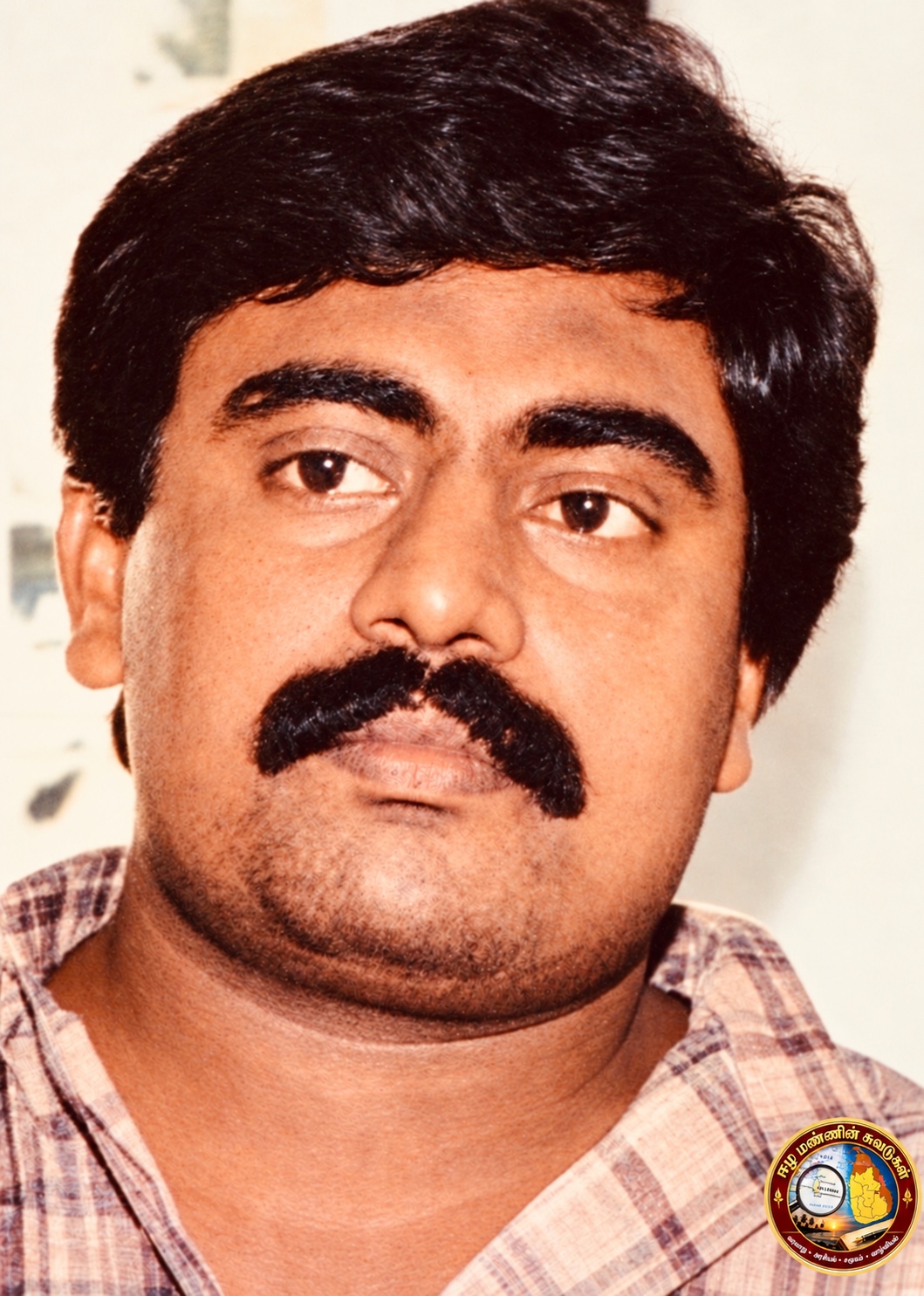
Kumarappa, whose given name was Balasundaram Ratnapalan, was born on 27 May 1957 in Valvettithurai, Jaffna.
He lived in the same Valvettithurai area where LTTE leader Velupillai Prabhakaran grew up, alongside people such as Kittu, Mahattaya and Gundappa. He therefore knew Prabhakaran closely from childhood. His elder brother Sivapali was among those who accompanied Prabhakaran during the bus-burning incident on 22 May 1972, carried out in protest against Sri Lanka becoming a republic.
Another elder brother, Balan, worked on LTTE cargo ships in the early years. Kumarappa’s younger brother also did similar work. Several members of his family were thus connected with the movement’s activities.
Although Kumarappa joined the LTTE in 1978, he left during the movement’s split in 1980 and went to Ireland. In 1983, he fully rejoined the LTTE.
After completing the LTTE’s second training camp, conducted by Indian security personnel in Himachal Pradesh, he returned and took part in various armed operations against Sri Lankan military and police personnel stationed in Tamil homeland areas.
Recognizing his abilities through his participation in operations in several districts, Prabhakaran appointed him commander of Batticaloa district and subsequently commander of Jaffna district.
As commander in Batticaloa and Jaffna, Kumarappa took part directly in several attacks against the Sri Lankan military and police and played an important role in strengthening the LTTE’s organization in those districts.
After the Indo–Sri Lanka Accord came into operation, Kumarappa’s group was intercepted by the Sri Lankan Navy while travelling at sea with Trincomalee district commander Pulendhi Amman and other members.
Taken first to Kankesanthurai and then to Palaly, Kumarappa wrote to LTTE leader Velupillai Prabhakaran after learning of the attempt to transfer him to Colombo.
In that letter he wrote:
“To the respected leader, I, Kumarappa, was arrested by the Sri Lankan Navy off Point Pedro at about 4.30 a.m. on 3.10.87. I was then brought to Kankesanthurai camp and from there to Palaly military camp, where I am under the observation of the Indian Peace Keeping Force and in the custody of the Sri Lankan military. I may furthermore be taken to Colombo. I do not recognize the laws of the Sri Lankan government. In the event that I am taken to Colombo, I am prepared to destroy myself completely. The Tigers’ thirst is the homeland of Tamil Eelam. Yours, Kumarappa.”
Although the letter consisted of only a few lines, it reveals how clearly he understood the situation and his own decision.
Who was Pulendhi Amman?
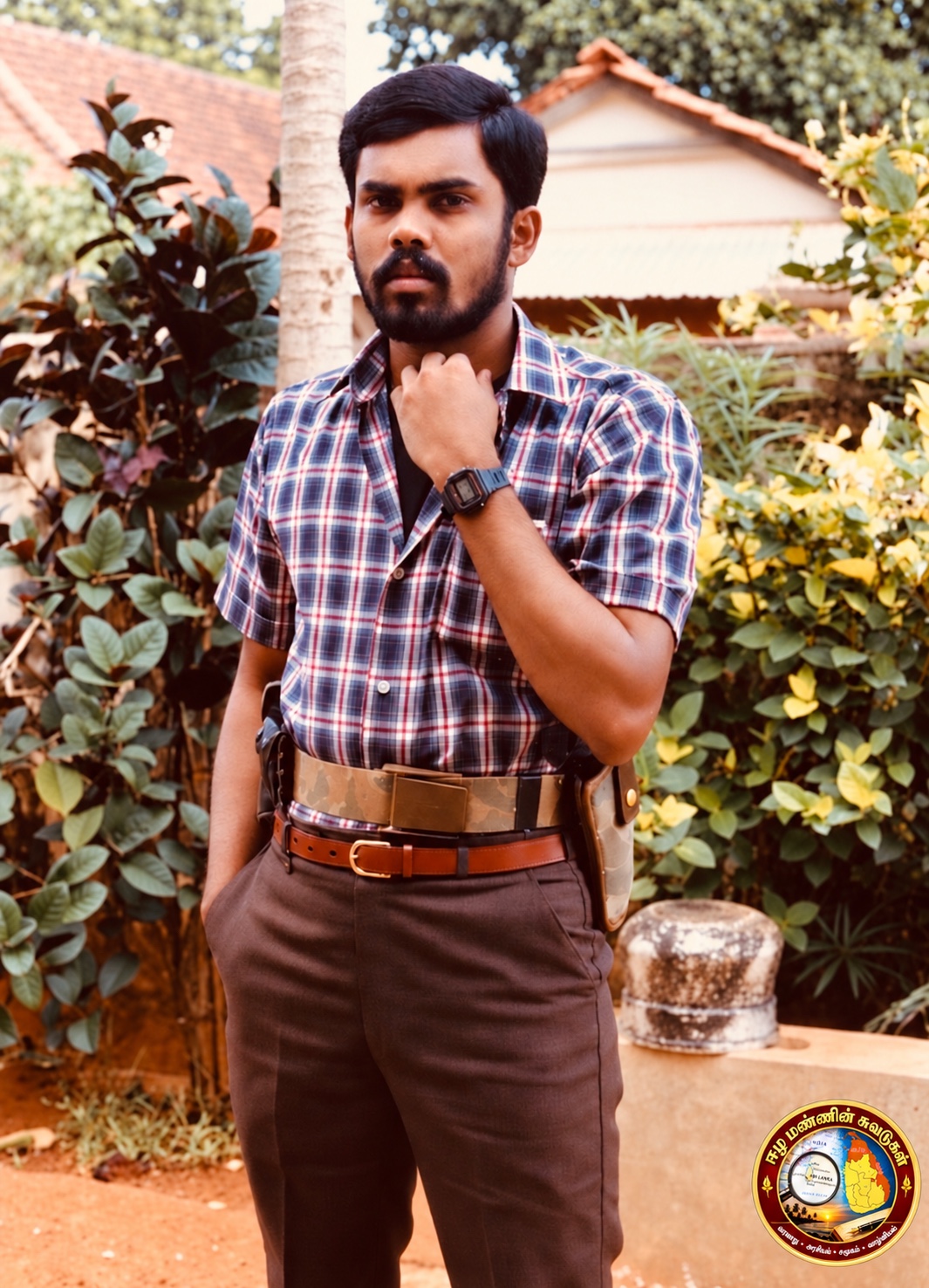
Pulendhi Amman, whose given name was Gunanayagam Tharmarasa, was born on 7 June 1961. He joined the LTTE in 1979, remained with it during the split in 1980 under the leadership of Velupillai Prabhakaran, and became a central committee member and Trincomalee district commander.
His name figured prominently in the LTTE’s early armed activities.
He took part in an early attack against Sri Lankan military personnel on Kankesanthurai Road on 15 October 1981.
He subsequently participated in several operations, including the attack on a police jeep at Point Pedro on 18 February 1983, the attack on United National Party candidate Muthiah at Chavakachcheri on 29 April 1983, the attack on military personnel at the Kantharmadam polling station on 18 May 1983, and the Thirunelveli attack on 23 July 1983.
Following the Thirunelveli attack, he completed training in the LTTE’s first camp conducted by Indian security personnel in Uttar Pradesh, India. Returning to Tamil Nadu, he conducted the LTTE’s fourth training camp in the Sirumalai forest in Dindigul district.
After returning to the operational area, he took part in the attack on Sri Lankan military personnel at Sripura junction on the Padaviya–Pulmoddai Road on 18 December 1984; the response to a military encirclement at Achchuveli on 9 January 1985; the fighting at Kokkilai on 14 February 1985; attacks on a military armoured vehicle and air force personnel on the Trincomalee–Kinniya Road; and armed operations at Mullipothanai and Panmathavachchi.
He was also an important commander in the armed resistance to settlement activity in traditional Tamil areas of Trincomalee district.
But his life was not confined to the battlefield.
During his stay in Ariyalai village, when someone died, he would be among those who carried the body on their shoulders in the funeral procession.
He helped with decorations in homes holding celebrations.
He advised young people who were in conflict with their families.
In the evenings, he coached young people in football.
He gave free lessons to students in the neighbourhood.
Many families consequently saw him not only as a member of an armed movement but as one of their own.
Because of his quick-moving nature, his friends gave him the nickname “Supersonic.”
Whether riding a bicycle or driving another vehicle, he was fast.
He was fast in training too.
Even when others lay exhausted after strenuous training, he would be smiling and moving energetically.
That young man later became an important commander in Trincomalee district.
Pulendhi Amman died without seeing the son who was to be born
When Pulendhi Amman died, he had been married for only a few months and his wife was six months pregnant. Because he died before his son was born, father and son never had the opportunity to see each other.
His son had to grow up without ever seeing his father.
The history of a liberation struggle is not written solely through attacks, political agreements and military operations.
Behind it were wives who lost husbands, children born without ever seeing their fathers, parents who lost sons and families who lost brothers.
His life and death were part of that human cost.
After learning of the attempt to take him to Colombo, he had asked for cyanide capsules to be sent.
His death brought a permanent family loss to his wife and unborn child. Accounts remembering him should include this family grief alongside his life in the movement.
Who was Karan?
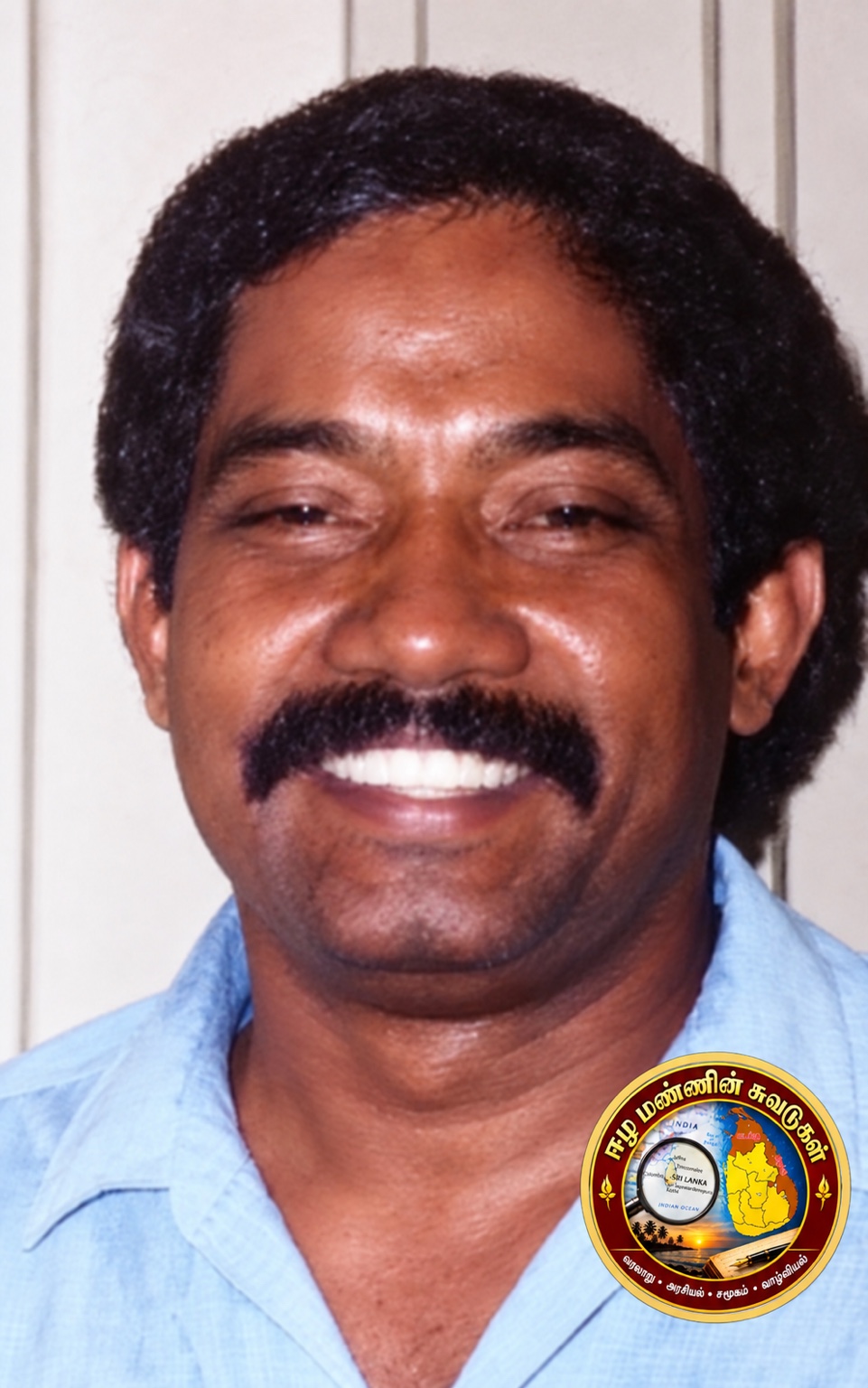
Vaithilingam Manoharan, later known as Karan in the LTTE, was born on 26 June 1953 to parents originally from Valvettithurai and Valvettai.
The Vaithilingam family had lived in Vavuniya for many years.
After the bus-burning incident of 22 May 1972, Velupillai Prabhakaran, then seventeen, was taken by his father to stay in Vavuniya. It was during that period that a close acquaintance developed between Prabhakaran and his relatives in the Vaithilingam family.
The family’s second son, Vaithilingam Sornalingam, later became known as Colonel Shankar.
Another brother, Vaithilingam Vaseekaran, known as Siddharthan, died in an accidental explosion during preparations for an attack on 14 February 1987.
A further brother, Vaithilingam Uthayakumar, known as Suthan, was arrested by government forces after leaving the movement, and his fate subsequently remained unknown.
The family’s life was thus intertwined with several phases of the Tamil Eelam struggle.
Karan married his cousin Gugeneswari, known as “Guga,” and became the father of two children. Alongside his family life, he was involved in the LTTE’s maritime operations and was responsible for the boat “Kadarpura.”
After being intercepted by the Sri Lankan Navy, he was taken first to Kankesanthurai camp and then to Palaly military camp. When Sri Lankan government forces attempted to take him to Colombo for further questioning, he bit a cyanide capsule and died at Palaly on 5 October 1987 with Pulendhi Amman, Kumarappa and the others.
After his death, which left behind his wife and two young children, Gugeneswari married his brother Vaithilingam Sornalingam, known as Colonel Shankar.
Karan’s history is therefore not only part of the history of the twelve who died at Palaly. It is also the history of a family whose children’s lives were deeply intertwined with the Tamil Eelam struggle.
From Thileepan’s death to Palaly
When the Indo–Sri Lanka Accord was signed in 1987, there was an expectation among Tamil people that a new political situation would emerge.
But it did not last long.
On 15 September 1987, Thileepan began a hunger strike demanding that the Indian government fulfil five demands made in connection with the Accord. After fasting for twelve days without even drinking water, he died on 26 September 1987.
Seven days after his death, on 3 October 1987, seventeen members, including Pulendhi Amman and Kumarappa, were arrested.
Two days later, on 5 October 1987, eleven died after ingesting cyanide at Palaly.
Captain Raguvappa died the following day.
While twelve died, five — Thameem, Karunanithi, Das, Selva and Sivakumar — survived after ingesting cyanide.
Within a few days, direct armed conflict began between the Indian Peace Keeping Force and the LTTE.
Thileepan’s death, the deaths of the twelve at Palaly, and the subsequent war with the IPKF cannot therefore be viewed only as separate events.
They formed an interconnected historical sequence.
What happened to the amnesty?
An important historical question requires an answer here.
Under the Indo–Sri Lanka Accord signed on 29 July 1987, the Sri Lankan government agreed in writing to grant militants a general amnesty.
At the weapons handover ceremony on 5 August 1987, Sri Lankan defence secretary Sepala Attygalle handed the amnesty document to Yogaratnam Yogi.
What, then, was the legal status of the seventeen, including Pulendhi Amman and Kumarappa, arrested on 3 October 1987 while that amnesty was in operation?
On what basis was it proposed to take them to Colombo for questioning?
When the Sri Lankan government arrested commanders of the movement that had handed over weapons relying on India’s guarantee, why was India unable to protect them?
Why could the efforts of senior Indian military officers and the Indian high commissioner not change the Sri Lankan government’s decision?
Why was the Indian protection that the seventeen had been under ultimately withdrawn?
The history of the twelve who died at Palaly cannot be written fully without confronting these questions.
Palaly: where trust broke down
The Indo–Sri Lanka Accord signed on 29 July 1987 was presented as a new beginning.
Weapons were handed over in August.
Thileepan died in September.
In October, seventeen members, including Pulendhi Amman and Kumarappa, were arrested.
Twelve of them died.
War then began between the Indian Peace Keeping Force and the LTTE.
Those who had signed an agreement for peace two months earlier stood on opposing sides of a war only weeks later.
Amid that change, Thileepan lost his life.
The twelve detainees also lost theirs.
The events at Palaly on 5 October 1987 were therefore not only the deaths of twelve members of an armed movement.
They were also among the important moments when Tamil trust in the Indo–Sri Lanka Accord broke down.
Remembering Kumarappa and Pulendhi Amman requires more than remembering the date of their deaths.
When were they arrested?
In what political circumstances were they arrested?
Was the amnesty in operation then?
Why was it proposed to take them to Colombo?
Why could India not prevent it?
Why was Indian protection withdrawn?
Why did war subsequently break out between the IPKF and the LTTE?
We must read that history with these questions in mind.
Only then can we understand fully both the history of the twelve who died at Palaly and the political breakdown that followed the Indo–Sri Lanka Accord in 1987.
Swami Shankarananthaa 🙏
Reader Comments
Loading comments…