
ARTICLES · GENERAL
Varada Bhai, Who Dominated Mumbai: The History of Varadaraja Mudaliar, His Support Among Poor Tamils and His Links to the Eelam Struggle
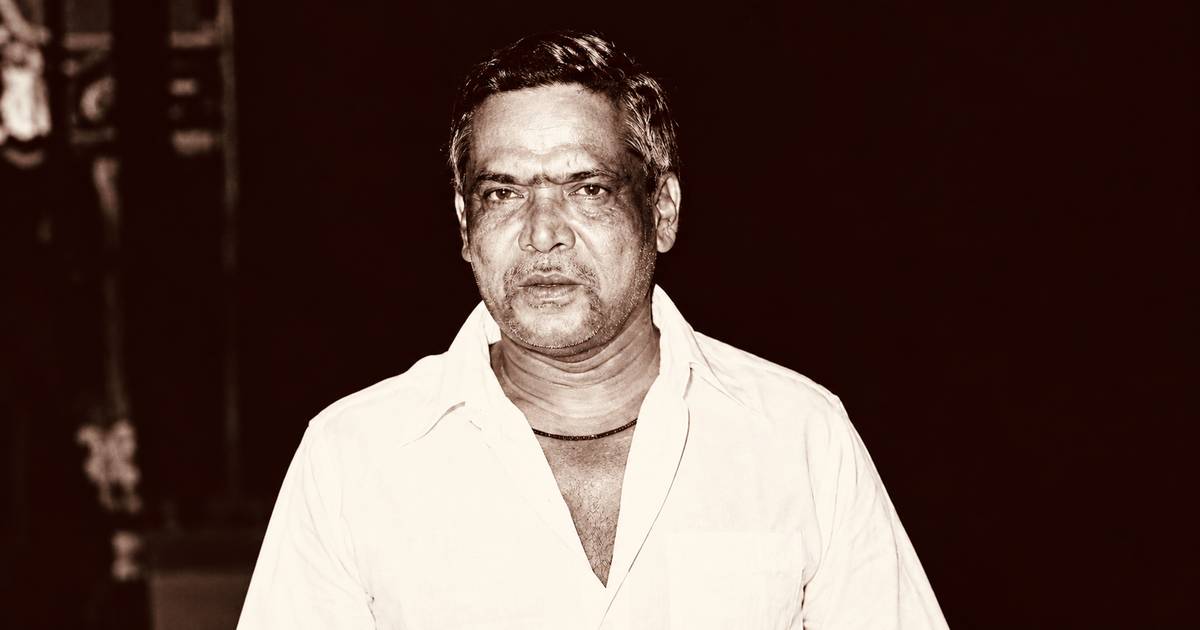
Among the Tamils who wielded considerable influence in the Indian city of Mumbai from the 1960s to the 1980s, one of the most prominent was Varadaraja Mudaliar, popularly known as Varada Bhai.
Having arrived in Mumbai as an ordinary labourer before establishing dominance in the city's underworld, Varadaraja Mudaliar occupies a distinctive place in India's criminal history.
He developed influence among Mumbai's poorer Tamils by helping them, and was regarded alongside Haji Mastan and Karim Lala as one of the three principal figures who dominated the city's underworld.
Varadaraja Mudaliar was associated with criminal activities including smuggling, illicit liquor trading, gambling and extortion. At the same time, he was also involved in social activities such as feeding the poor, offering financial assistance and organizing religious events.
Yet there is another aspect of Varadaraja Mudaliar's life that is less widely known: his support for the Eelam Tamil liberation struggle in the 1980s and his connections with Eelam liberation organizations active in India.
Varadaraja Munusamy Mudaliar was born in Thoothukudi, Tamil Nadu, in 1926, while his family's ancestral origins were connected to Sathuvachari in the Vellore region.
Having faced economic hardship in his youth, he went to what was then known as Bombay in search of better opportunities.
At the time, Bombay was one of India's leading commercial centres. People migrated there from across the country seeking employment in its ports, factories, railway stations and commercial establishments.
Workers who came from Tamil Nadu settled in areas including Matunga, Dharavi, Sion Koliwada and Wadala.
Varadaraja Mudaliar began his own life in the city as one of the many ordinary Tamils who had arrived looking for work.
He worked as a porter at Bombay's Victoria Terminus railway station and subsequently established contacts with people engaged in illegal trade around the port.
Those connections transformed the course of his life.
Initially involved in the distribution of illicit liquor, Varadaraja Mudaliar later moved into various criminal activities, including stealing cargo from the docks and smuggling.
His association with Haji Mastan, who held considerable influence over smuggling operations at the Bombay port, played a major role in Varadaraja Mudaliar's rise.
At a time when India imposed strict restrictions on imports of goods including gold, smuggling centred on Bombay's harbour generated substantial revenue.
Haji Mastan's influence and Varadaraja Mudaliar's local network became connected through this illegal trade.
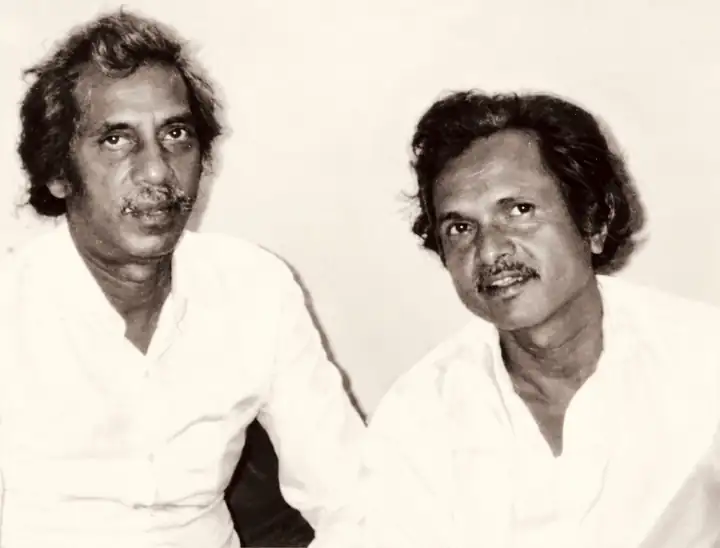
During the 1960s and 1970s, Varadaraja Mudaliar's influence steadily expanded.
While Karim Lala's group held sway in parts of southern and central Mumbai and Haji Mastan maintained a powerful network in port smuggling, Varadaraja Mudaliar strengthened his influence in Matunga, Dharavi, Sion Koliwada and surrounding areas.
The three major underworld figures thus developed networks of their own.
Varadaraja Mudaliar's authority did not arise from illicit business alone. His relationships with poor Tamil migrants in Mumbai were also important to his standing.
Many Tamils newly arrived in Bombay faced language barriers, unemployment, inadequate housing and financial hardship.
By intervening in the everyday difficulties of people living in slum settlements and providing assistance, Varadaraja Mudaliar established a place for himself in the community.
Many approached him to resolve housing problems, workplace disputes and family disagreements.
In certain areas, people developed the habit of taking disputes to Varada Bhai instead of approaching the police or the courts.
Although he exercised power outside the law, some poorer Tamils consequently regarded him as a protector.
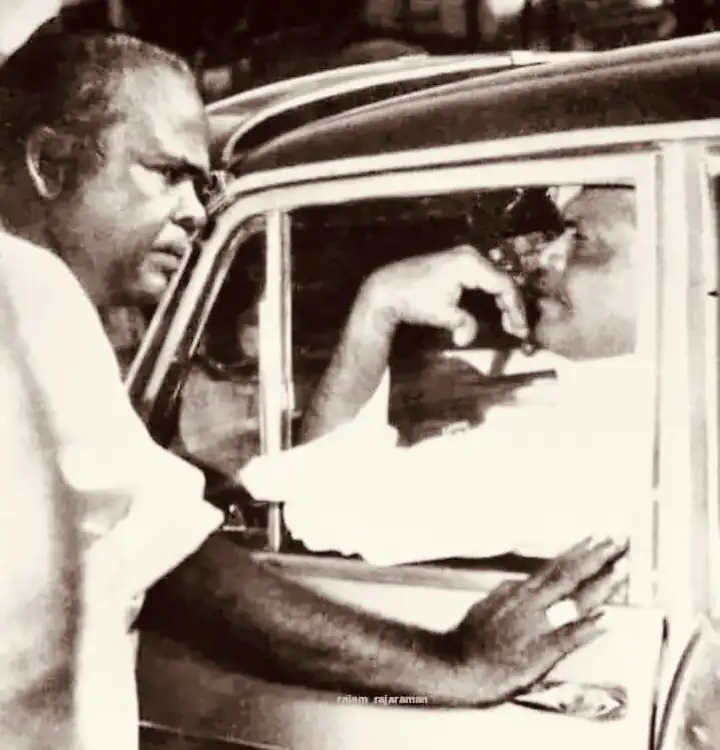
At the same time, that influence rested partly on criminal power and intimidation. His charitable activities and his criminal operations were intertwined to an extent that made them difficult to separate.
Varadaraja Mudaliar was also deeply involved in religious activities.
He regularly provided food to poor people at the Bismillah Shah Baba dargah in Mumbai and continued doing so even after his financial circumstances improved.
He also played a significant part in organizing large-scale Ganesh Chaturthi celebrations near Matunga railway station.
Varada Bhai's Ganesh Chaturthi festival became well known in Mumbai. Held with elaborate marquees, decorations and religious ceremonies, these celebrations attracted thousands of people.
The public support generated through such religious occasions further strengthened his social authority.
For Varadaraja Mudaliar, who had gained substantial influence in Mumbai's underworld, connections with the Eelam Tamil liberation struggle also became a significant part of his life during the 1980s.
Ethnic violence against Tamils in Sri Lanka had occurred repeatedly at different points since 1956.
The anti-Tamil violence of 1958, the ethnic violence of 1977 and the burning of the Jaffna Public Library in 1981 were followed by the large-scale anti-Tamil violence of July 1983, which marked a major turning point in Eelam Tamil political history.
Following the violence of July 1983, the Eelam Tamil liberation struggle received greater attention in India.
Political parties, student organizations, Tamil activists and community organizations in Tamil Nadu undertook various activities in support of Eelam Tamils.
During the same period, several movements—including the Liberation Tigers of Tamil Eelam, the People's Liberation Organisation of Tamil Eelam, the Eelam People's Revolutionary Liberation Front, the Tamil Eelam Liberation Organization and the Eelam Revolutionary Organisation of Students—were operating in India.
Members of Eelam liberation movements based in India established various contacts in order to secure political support, funding, accommodation, training and other assistance.
Efforts to raise awareness of the Eelam Tamil issue also extended beyond Tamil Nadu. Meetings and political activities in support of Eelam Tamils took place in cities including Mumbai and Delhi.
It was in this context that Varadaraja Mudaliar openly expressed support for Eelam Tamils.
At a public meeting held at Mumbai's Shanmukhananda Hall in 1985, Varadaraja Mudaliar announced that he would donate 25,000 Indian rupees to the Eelam People's Revolutionary Liberation Front.
He also offered to bear the entire expense of sending 500,000 postcards to the then Indian prime minister Rajiv Gandhi, urging assistance for Eelam Tamils.
At a time when calls for the Indian government to pay greater attention to the Eelam Tamil issue were growing, the campaign to send half a million postcards represented a major political mobilization. It was also noteworthy that Varada Bhai, a powerful figure in Mumbai's underworld, publicly announced financial assistance to an Eelam liberation movement.
Varadaraja Mudaliar's expressions of support for Eelam Tamils were not confined to Mumbai.
He also participated in public meetings, demonstrations and processions in the Indian capital, Delhi, in support of Eelam Tamils.
He maintained close ties with Valampuri John, who at the time was an All India Anna Dravida Munnetra Kazhagam member of Parliament and editor of the magazine Thai.
Through these political connections, he participated in a variety of initiatives relating to the Eelam Tamil issue.
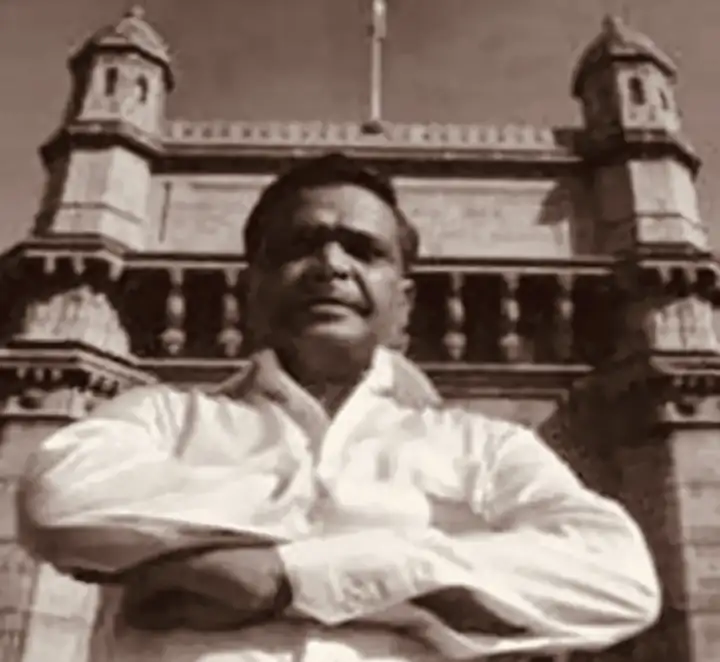
An episode in which Vamadevan of the People's Liberation Organisation of Tamil Eelam, known as Captain Kumar while operating in Mumbai, approached Varadaraja Mudaliar indicates that there were direct contacts between the underworld figure and members of Eelam liberation movements.
Although the Eelam liberation movements of that period differed in their political positions and methods, the Eelam Tamil cause attracted support from a range of social and political circles in India.
The activities of influential people such as Varadaraja Mudaliar formed part of that wider support for Eelam Tamils.
It is possible that contacts associated with Varadaraja Mudaliar were used for the LTTE's international arms procurement or other activities, but no historical evidence has yet been found to substantiate that possibility.
Thus, while the Eelam liberation struggle was expanding its reach in India, Varadaraja Mudaliar, a figure who dominated Mumbai's underworld, was among those involved in activities supporting Eelam Tamils.
Meanwhile, his power in Mumbai had begun to decline gradually from the early 1980s.
Mumbai police launched intensive operations against the criminal network he had built through years of illegal trading.
Police officer Y. C. Pawar, in particular, played an important role in suppressing illicit liquor outlets, gambling establishments and other criminal activities controlled by Varadaraja Mudaliar.
Many of his associates were arrested, while some were killed in armed encounters with the police.
Operations targeting the illicit liquor business and gambling establishments that formed major sources of income for Varadaraja Mudaliar weakened his financial influence.
Police also imposed restrictions on the large Ganesh Chaturthi celebration he organized near Matunga railway station.
Limiting the scale of the religious festival, which had served as an important public demonstration of his influence, was another significant development in the decline of his power.
After losing the influence and security he had formerly enjoyed in Mumbai, Varadaraja Mudaliar moved to Chennai in the mid-1980s and lived there.
He spent his final years in Chennai and died of a heart attack on January 2, 1988, aged 61.
Following his death, his longtime friend Haji Mastan arranged a private aircraft to take his body from Chennai to Mumbai.
Thousands of people attended the final tribute ceremony in Mumbai.
Many Tamils living in Matunga, Dharavi, Sion Koliwada and other areas paid their respects.
Thus came to an end the life of Varada Bhai, a man who had once wielded immense power in Mumbai's underworld.
Reader Comments
Loading comments…