
HISTORY OF THE EELAM STRUGGLE · EDITORIAL
The Killing of Das and the Punishment of Sri Sabaratnam
The historical background to the 1986 conflict between the Tamil Eelam Liberation Organization and the Liberation Tigers of Tamil Eelam
Introduction: The growth and internal divisions of the Tamil Eelam Liberation Organization
In 1983, the Indian military trained the Tamil Eelam Liberation Organization, or TELO, in Uttar Pradesh.
Among the 20 or 23 leading fighters were Sri Sabaratnam, Das, Bobby, Guru, Senathi, Mizoram, Selvam, Subash, Sudhan, Ramesh, Sivaperuman, Palaiya, Mathi, Chetty, Gandhi, Suki, Bruce, Gnani, Vichu, Richie Master and several others. Hundreds of fighters completed training under their leadership.
Even after the trainees left Uttar Pradesh, they remained loyal to their respective group leaders.
That created a situation in which each asked: Am I the greater one, or are you?
The rivalry over who was more important between Das's group and Bobby's group led to the shooting and killing in 1986 of Das, who was from Udupiddy, and his companions. They had gone unarmed to Jaffna Teaching Hospital to see Suki, who was being treated there.
In this brutal fratricidal killing, carried out in public for the first time, doctors, nurses and some civilians also died.
This was one of the reasons that created an urgent need for the Liberation Tigers of Tamil Eelam to take action against TELO.
Background: Why was TELO banned?
TELO took pride in proclaiming itself the first organization to emerge in the history of the Tamil Eelam armed struggle. Yet, because of its arbitrary and anti-people conduct, it became the first organization banned by the LTTE from operating in the Tamil Eelam homeland in 1986.
Nevertheless, in 2001 the LTTE allowed TELO to engage in politics along with subsequently banned organizations such as the EPRLF and other political parties.
I am recording why action was taken against TELO and why it was banned, so that those unfamiliar with this history may know.
1. What happened? The background to the Das–Bobby rivalry
Toward the end of 1985, TELO leader Sri Sabaratnam came from Tamil Nadu with a large quantity of weapons supplied by the Indian government and established a camp in Kalviyankadu, his hometown in Jaffna.
Bobby, born in the same Kalviyankadu and an important TELO member, was influential in that area.
But Das of Vadamarachchi and his group had greater influence both within the movement and among the people than either TELO leader Sri Sabaratnam or Bobby, whom I described above as influential. That led to a serious conflict between Bobby and Das.
Unable to settle it, Sri Sabaratnam instructed Bobby to kill Das.
Unable to confront Das directly, Bobby and his group waited for an opportunity to kill him.
2. The killing of Das at Jaffna Teaching Hospital
At that time, on 11 March 1986, Das and four of his companions went without weapons to Jaffna Teaching Hospital to visit Suki, another prominent TELO member. Bobby's group entered the hospital armed and shot them dead.
They also killed Magistrate Kirupakaran, who had come there for medical treatment, and a nurse who worked there, and wounded several civilians.
At a time when even the Sinhala military had not entered a hospital to shoot and kill Tamils, TELO committed this atrocity and indiscriminate gunfire without hesitation. That fratricidal killing left an indelible scar on the history of the Eelam struggle. TELO thereby recorded itself as the first movement to enter a hospital and kill Tamils, before the Indian military did so in the history of the Eelam war.
3. The public march against the killing of Das and the shooting
People marched toward the Kalviyankadu camp to condemn TELO's attack and demand the bodies of Das and the others who died with him. Without the slightest pang of conscience, the organization fired at the procession and killed two Tamil civilians, a man and a woman.
After the July 1983 violence, TELO recruited indiscriminately, including antisocial elements. With the considerable armed strength supplied by the Indian government in 1985, its members behaved in an arbitrary, bullying way, without humanity or respect for the people.
As a result, minor tensions arose between LTTE and TELO members in places such as Maruthanarmadam and Manipay in Jaffna district.
The LTTE's local leaders took action to keep all of these incidents under control so that the TELO members would not overstep.
4. TELO's internal divisions and its relationship with the Tigers
From TELO under Thangathurai to TELO under Sri Sabaratnam, LTTE leader Velupillai Prabhakaran and his commanders maintained cordial relations with that organization. Yet TELO's leadership continued to sow hatred of the Tigers among its members.
Even before the Das–Bobby conflict within TELO, Sudhan, who was second only to Sri Sabaratnam and had fallen out with him, and Ramesh, who had been the movement's military commander before Das, were abducted with the intention of killing them. TELO falsely accused them of trying to kill Sri Sabaratnam with the Tigers' help.
They were saved from being killed by TELO through the intervention of the Indian government.
In other words, TELO converted an internal dispute into opposition to the Tigers and taught that hostility to its members, making it one of the organization's policies.
Even so, relations between the Tigers and TELO remained cordial as long as Das was alive. That is the reality.
5. TELO's accusations after the killing of Das
After Das was killed, TELO made accusations against him and his group to justify why it had killed him.
Its allegations that Das and his group had murdered parliamentarians Alalasundaram and Dharmalingam and had been involved in several robberies in Jaffna, including at temples, were unbelievable. They caused not only the Tigers but also the people of Jaffna to lose confidence in TELO.
Having become the first movement to shoot and kill innocent Tamil civilians, it also lost the moral support of Jaffna's Tamil people.
6. The remembrance of fighters killed at sea and rising tension between the two movements
Forty-three days after TELO killed Das and his companions, on 23 April 1986, eleven TELO members arriving from India were killed by the Sinhala navy. Yet the Tamil people did not commemorate them with an outpouring of feeling.
Four days later, on 27 April 1986, a boat carrying LTTE members from India came under attack by the Sinhala navy. When the ten members aboard died as martyrs, the Tamil people remembered them with deep feeling.
The TELO leadership was upset and angry at this contrast, and its displeasure intensified its members' anger toward the Tigers.
That heightened anger, born of TELO's leadership's resentment toward the Tigers, led its members to provoke and argue with LTTE members who were on security duty in Ariyalai on 29 April 1986.
The argument escalated to the point where TELO members attacked the LTTE members directly, as they had planned.
7. The Ariyalai incident and what followed
The LTTE members assaulted by the TELO group reported the incident by radio to Nada, who at the time was in charge of the Tigers' Nada House.
Nada rushed to the scene. Seeing the TELO members who had attacked the Tigers travelling on bicycles, he stopped them, caught them, reprimanded and struck them, warned them, and sent them away.
Angered further, TELO's leadership and senior members took the dispute that had occurred in Ariyalai into Kalviyankadu, which they themselves called their stronghold and which was the hometown of their leader Sri Sabaratnam. They intended to show their strength to the Tamil people who had not commemorated the TELO members killed by the Sinhala navy on 23 April 1986, and to teach the LTTE a lesson with their manpower and weapons.
They therefore wanted to abduct an important LTTE member. But it was not easy for them to abduct Sara, the local commander from Kalviyankadu itself.
8. Who was Sara?
Sara had come from Germany to join the LTTE, joined the organization and received training in its third training camp.
He was courageous by nature and loved by the people of Kalviyankadu, the town TELO proclaimed to be its stronghold.
That affection was another reason why abducting him would not be easy.
While roaming about in anger, TELO members saw banners in Kaddaipirai that local people had put up in memory of the Tigers who had died at sea on 27 April 1986. They tore down the banners.
They also attacked civilians who tried to stop them.
The incident was reported to Murali, the LTTE's Kopay-area commander. TELO members waiting for an opportunity to abduct a Tiger seized him when he came to the scene, on the same day as the Ariyalai incident.
9. Who was Kopay Murali?
Murali, whose name was Velupillai Ratnasingam, was the Kopay-area commander abducted by TELO at Kaddaipirai on 29 April 1986. He was born in 1958 in the Puthur area of Avarangal.
While living in London, he met Anton Balasingham, known as the Voice of the Nation, during a period when the struggle was intensifying. He came from London in 1983, joined the Tigers and trained in their first camp in India under Victor, known as Marusaleen Kiyuslas.
During the Sinhala military's attack on the Achchuveli camp of Pandithar, one of the LTTE's leading commanders, on 9 January 1985, Murali's nearby house was completely damaged by Sri Lankan soldiers who had come to surround the camp.
After this, his brother Velupillai Rajagopal, known as Thambi, also joined the LTTE. On 14 April 1985, while travelling to Tamil Nadu for training, he died when the Sri Lankan navy attacked the boat he was travelling in, the first such boat to be attacked in the waters of Tamil Eelam in the history of the struggle.
Thus, in a family of two sons, a year after the younger brother died, the elder brother, Kopay-area commander Murali, was abducted by TELO. Before that news reached Jaffna district commander Kittu, or Sathasivam Krishnakumar, at the Tigers' headquarters near Thattatheru junction, senior fighter Baseer Kakka had come to the camp. Baseer Kakka, who remained in the struggle until the tragic end at Mullivaikkal, needed to collect photographs of those killed at sea for a memorial tribute. With a fighter named Chandru, he set off along Palam Road in Kalviyankadu, TELO's stronghold, toward Irupalai, where the Tigers' photography unit operated under Remington.
10. Baseer Kakka is abducted by TELO
Beyond the Kalviyankadu Gnanabaskarothaya community centre, TELO members led by Niththi stopped Baseer Kakka and Chandru as they rode a motorcycle and insisted that they come with them to discuss the incident in Ariyalai.
From their tone, the senior fighter Baseer Kakka understood the situation. He told them that the younger fighter Chandru had to go to the printing press and, without waiting for their answer, deftly sent him away.
Chandru understood that he had been sent to inform commander Kittu that Baseer Kakka had been captured by TELO. Instead of going to the Tigers' photography unit in Irupalai, he hurried along Rajapathai to headquarters.
When he arrived to report that Baseer Kakka had been detained, he found district commander Kittu and the other fighters at headquarters already seething after hearing that TELO had abducted Kopay Murali.
Chandru nevertheless told Kittu that Baseer Kakka too had been forcibly detained by TELO.
This made Kittu, Sathasivam Krishnakumar, still more furious.
11. Who was Baseer Kakka?
There were several reasons why commander Kittu became so angry on hearing Chandru's report that TELO had forcibly abducted Baseer Kakka.
In the history of the Eelam struggle, Baseer Kakka is more than a name; he is an entire human history.
Baseer Kakka, whose name was Manohar Muthukumar, was born on 7 August 1955 in the Nayanmarkaddu area of Ariyalai. He joined the LTTE in 1981.
In the early period after joining, he took part in several operations under the Tigers' first commander, Aseer, or Lucas Charles Anthony. His first attack, however, was on the Chavakachcheri police station.
Seelan was wounded in that attack and died in a military encirclement several days later. In retaliation came the historic Thirunelveli battle led by Sellakili Amman, in which the national leader and senior Tiger commanders fought. Baseer Kakka was among the eighteen who stood firmly with the leader there.
He also stood firm in the Umayalpuram battle under Kittu. The national leader recognized his abilities and appointed him the first district commander for Ampara and Batticaloa, districts we Tamils still fear may remain beyond the reach of our people in the Eelam homeland. I record that Baseer Kakka also resolutely carried out the first prison break in the history of the Eelam struggle.
Together with the national leader from the movement's early days, Baseer Kakka wrote many daring chapters in the history of the armed struggle. As he survived the tragic end at Mullivaikkal and still lives in the homeland, I will pass over much of his full contribution out of respect for his circumstances today.
I will add that, as editor of the Eelanatham newspaper, he also raised awareness of the liberation struggle among the Eelam people. I have recorded this short account so that those who do not know his history may learn of him.
But TELO's abduction of such a distinguished senior Tiger was not the only thing that stirred Kittu's anger.
It was Kittu who had spoken to Prabhakaran and obtained permission for the arrangements for Baseer Kakka's wedding, the first marriage in the LTTE after that of the national leader.
The wedding took place on 23 April 1986, just days before Baseer Kakka was abducted by TELO. Kittu had signed as a witness.
Months earlier, when TELO abducted Tiger members Idea Vasu and Shanmugam, Kittu instructed the Jaffna district political officer at the time, Thileepan, to negotiate their release. This time, mindful of the personal circumstances of Kopay Murali and Baseer Kakka, Kittu decided:
“If Baseer Kakka and Murali are not freed within half an hour, we will confront them directly!”
He sent that warning to TELO's leadership in the Kalviyankadu camp and, even amid the tension, made sure that an appropriate person conveyed it.
12. The armed confrontation begins at Kaddaipirai
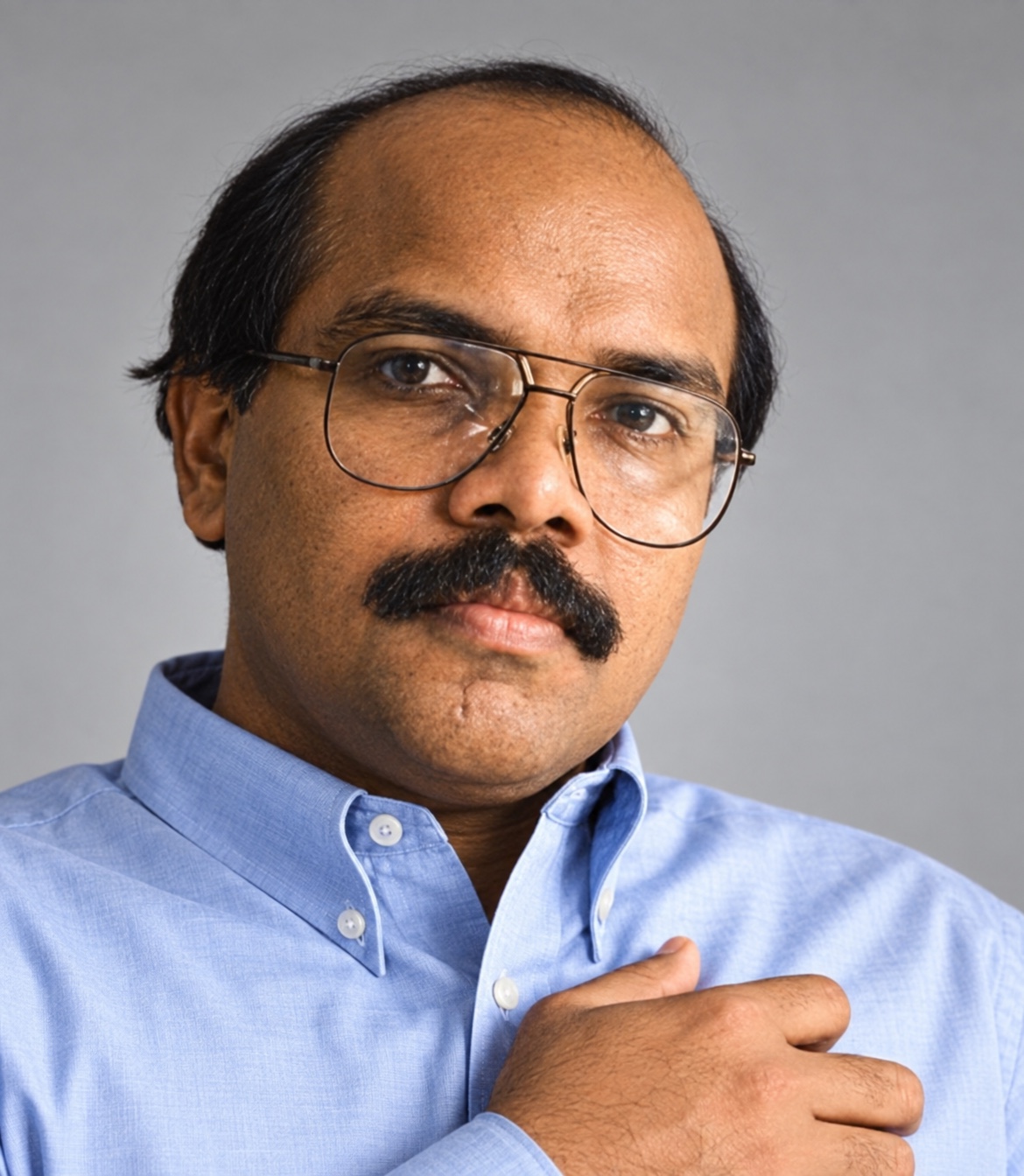
After that, on Kittu's orders, an LTTE unit travelled by a pickup truck and a van toward the TELO camp at Kaddaipirai and reached the Kaddaipirai junction known as Moonram Kattai, or the Third Post.
TELO's commanders had ordered their members to shoot anyone arriving with weapons. In keeping with those orders, a TELO member fired when he saw the LTTE unit reach the junction.
The Tigers' guns then began to fire in response.
At the camp where TELO held Baseer Kakka, a TELO member came with the news, shouting:
“They've come!”
The camp became tense, and Kopay Murali was dragged in from another room.
Neither Baseer Kakka nor Murali had known that the other had been captured. They were shocked to see one another.
Before that shock had passed, TELO members bound both men's hands and blindfolded them on the orders of their commanders Niththi and Kamal.
After a short while, gunfire began to sound much closer to the camp.
“If we finish off these two, it will work out!” said one TELO member.
“No! We can use them to escape!” said another.
The others agreed with the second man.
Many LTTE members had also arrived from the Mannar and Vanni districts for a planned attack on the Point Pedro military camp. They too surrounded TELO's stronghold in Kalviyankadu.
The vindictive action TELO took against the Tigers, at the wrong time and in the wrong way, turned against it.
As the Tigers targeted and besieged TELO camps around Kalviyankadu, news of the fighting was sent to the LTTE's other units throughout Jaffna district.
13. Senior fighter Lingam is killed at Vaddukoddai
To prevent reinforcements from reaching TELO members in Kalviyankadu, a Tiger unit that included the Madan House and Kuppu House groups went to TELO's camp in Vaddukoddai to disarm it. The unit was led by senior fighter Lingam.
As Lingam stepped out of his vehicle at the Vaddukoddai camp, a machine gun fired by a TELO member on guard outside riddled his face with bullets.
The Tigers, enraged by the fall of their senior fighter, immediately attacked and destroyed that camp and several other TELO camps around Vaddukoddai and Moolai.
Among those killed were important TELO members Eelamannan and Sankarlal, as well as others. James of Sulipuram was wounded in the stomach.
The killing by TELO of senior Tiger Lingam, who had cycled from Mallakam with Baseer Kakka to take part in the historic Thirunelveli attack, was no ordinary event.
14. Who was Lingam?
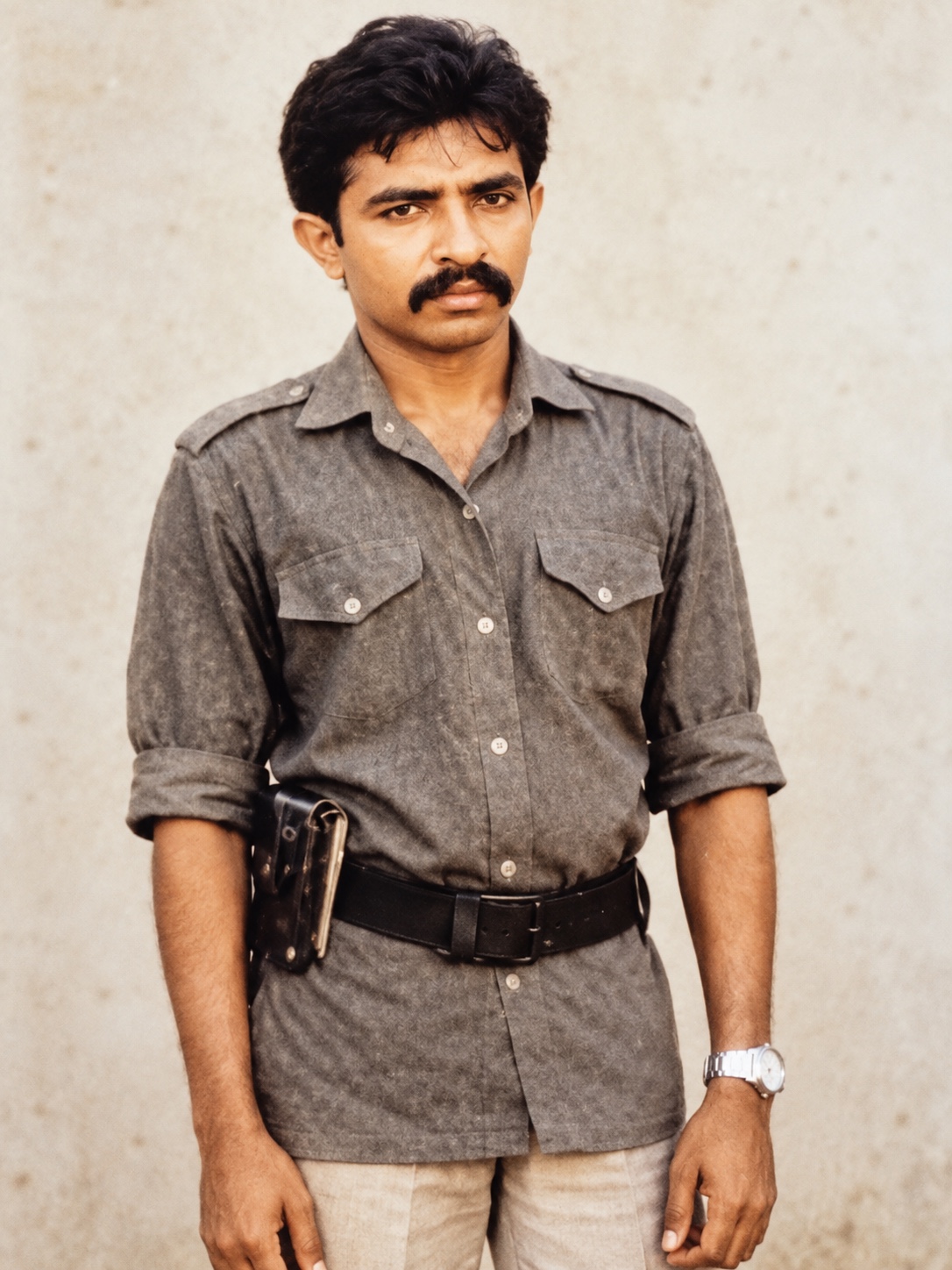
Lingam, whose name was Singaravel Selvakumar, was born in Valvettithurai on 16 December 1960. He became a supporter of the LTTE while still at college and began helping the organization in 1980, at the age of twenty.
He joined as a full-time member in 1981 and received military training that year.
He played an important part in many LTTE attacks: under its first commander Aseer, or Lucas Charles Anthony; under Sankar Sathyanathan, who became an attack commander while Charles Anthony was wounded; under Sellakili Amman in the historic Thirunelveli attack in July 1983; and later under attack commander Kittu, or Sathasivam Krishnakumar.
In training conducted by Indian armed forces in Uttar Pradesh under Ponnamman, Lingam served as a team leader alongside nine other selected senior fighters: Pulendhi Amman, Victor, Kittu, Rajesh, Ganesh, Aruna, Suppanna, Yogan Father and Pottu Amman. He completed the training and came to Tamil Nadu.
In 1984 he served as the LTTE's representative in Madurai and built good relations with the people of Tamil Nadu.
In the early days he was an assistant and bodyguard to the national leader, who held him in affection.
Returning to the homeland toward the end of 1985, Lingam mixed easily with each of his fellow fighters.
Even before the movement wore military uniforms, he dressed in clothing resembling one and appeared dignified.
Strict in his duties but easy to get along with, he was deeply loved by all the younger fighters.
Because this respected senior fighter was killed by TELO members at the entrance to their camp near Sankarathai junction on 29 April 1986, the Tigers tightened their siege of Kalviyankadu, targeting TELO leader Sri Sabaratnam.
15. The disarming of TELO in the northern and eastern provinces
While the Tigers tightened their siege of Kalviyankadu in Jaffna district and acted against the TELO leadership, they also began operations to disarm TELO across the Vanni region and Mannar district, as well as in the eastern districts of Batticaloa, Ampara and Trincomalee.
The TELO camp at Kokkadichcholai in Batticaloa district was attacked under the leadership of Pottu Amman, coordinated by district commander Kumarappa, and some people were killed.
TELO did not put up much resistance. After disarming its members, the LTTE's Batticaloa district leadership allowed most to return to their homes and some to travel to Jaffna district.
In Trincomalee district, the district commanders at the time, Pulendhi Amman and Santhosam Master, and senior fighter Ganesh, the Muttur regional commander, disarmed TELO members without a confrontation. The members were permitted to go home or to other places where they would be safe.
However, an important TELO member named Mathi was sentenced to death by the Tigers when he tried to flee instead of surrendering.
Although eight LTTE fighters were killed in Mullaitivu district of the Vanni region, the Tigers completed the disarming of TELO under commanders Jeyam, Baseelan and Suseelan, coordinated by the Vanni district commander at the time, Mathaya.
16. The siege of Kalviyankadu and the surrender of TELO members
Meanwhile, as the siege tightened around Kalviyankadu in Jaffna district, TELO members who had fought the Tigers around Vaddukoddai, Moolai and Sulipuram retreated toward Karainagar.
Some TELO members, including Mayavan, known as Sun, escaped.
During the fighting, some TELO members guarding the vehicle parking area at Thirunelveli market were also killed. This was unfortunate.
An LTTE fighter named Alisran was wounded in the Kalviyankadu fighting and died the following morning from severe blood loss. That too was unfortunate.
While all this was happening outside, Baseer Kakka and Kopay Murali, blindfolded on the orders of TELO commanders Niththi and Kamal, escaped from the place where TELO held them and reached the Tigers.
As Tiger fighters disarmed TELO across Jaffna district, they carried out an intense confrontation and disarming operation in Kalviyankadu and Kaddaipirai, TELO's powerful stronghold, with TELO leader Sri Sabaratnam as their target.
Unable to withstand the LTTE's intense attacks, some TELO members were killed and many began to surrender.
In an effort to stop the fighting, the Tigers used loudspeakers fitted to a vehicle to call on TELO members throughout the surrounding area to surrender.
Many more surrendered as a result.
Chinna Paruva, the younger brother of Oberoi Devan, leader of TELA, who had attended the Thimpu talks on TELO's behalf, was hiding in a house in Nallur.
He was wounded in the leg when he was arrested.
Around the same time, Niththi of TELO, whose abduction of Baseer Kakka and Kopay Murali had started the conflict between the two movements, was arrested along with several others.
The Tigers continued to search for Sri Sabaratnam, who had not yet been captured.
17. The killing of Sri Sabaratnam in Kondavil
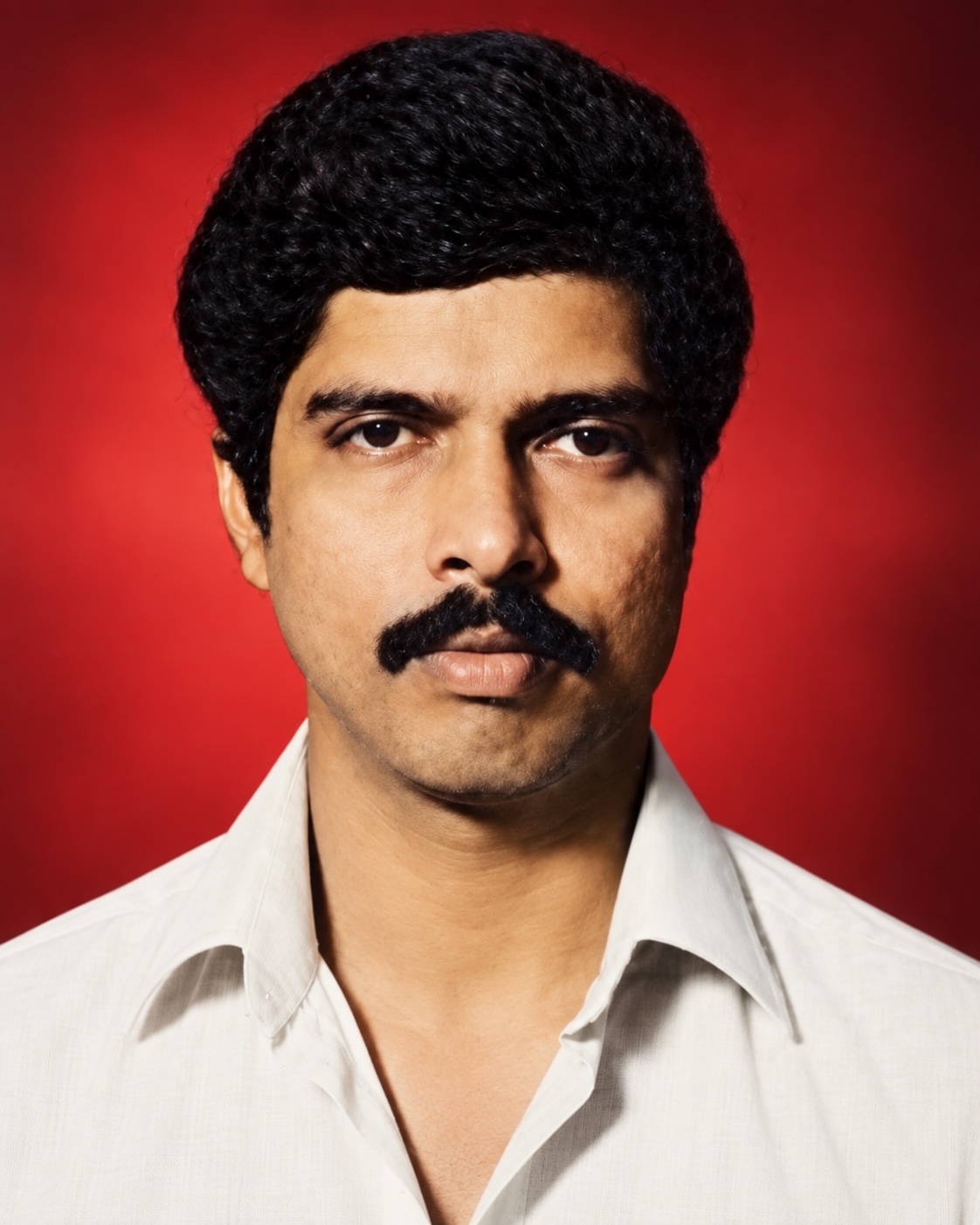
TELO leader Sri Sabaratnam, Bobby, who had been a principal instigator of Das's killing, and several others retreated to Kondavil and hid in a tobacco field.
News that Sri Sabaratnam and other TELO members were hiding there reached Idea Vasu, who was then responsible for intelligence operations in Jaffna district.
Once the information had been checked, a Tiger unit moved toward Kondavil and approached the location to surround it. Realizing the danger, Bobby seized Sri Sabaratnam's pistol and fled. The remaining TELO members escaped from the Tigers with him.
Sri Sabaratnam was thus left alone in the tobacco field at Kondavil, with nobody beside him.
When the Tiger unit approached the TELO leader, abandoned by his organization and alone, he created a tense confrontation there. An LTTE fighter who served as the bodyguard of Victor, the Mannar district commander, then shot Sri Sabaratnam in the leg.
After that, the LTTE imposed the death penalty on TELO leader Sri Sabaratnam.
18. The Sudhan–Ramesh dispute and Sri Sabaratnam's death
In TELO's internal split over Sudhan and Ramesh in 1984, the organization alleged that they had obtained a pistol from Prabhakaran and planned to abduct and kill Sri Sabaratnam. TELO members signed and issued a statement in Sri Sabaratnam's name on 5 May 1984 and abducted Sudhan and Ramesh intending to kill them.
Mano Master, an important TELO figure at the time, was upset that his brother Sudhan had been abducted. He began a nonviolent demonstration on Marina Beach demanding the release of Sudhan and Ramesh.
The news reached both the Tamil Nadu police and senior LTTE figures.
Intelligence gathered by leading Tigers, including Vaithiyalingam Sornalingam, known as Sankar and the first commander of the LTTE's air wing, and Lieutenant Raja, or Paramadeva, the first martyr from Batticaloa, helped save Sudhan and Ramesh from TELO's internal fratricidal killing. On the Tamil Nadu chief minister's orders, the Tamil Nadu police rescued them and handed them to the LTTE. They were safely sent from the Vedaranyam shore to their hometowns of Thondamanaru and Kamparmalai.
Exactly two years and one day after Sri Sabaratnam's statement of 5 May 1984, on 6 May 1986, that TELO leader himself was punished by the Tigers' guns. That is a strange turn of events.
19. Sri Sabaratnam's funeral and the end of the confrontation
The body of TELO leader Sri Sabaratnam, sentenced to death by the LTTE, was properly cremated on the same day, 6 May 1986, at the cremation ground in Irupalai by a senior Tiger member who had known him closely.
The fight that TELO had forced upon the Tigers thereby came to an end.
TELO members who had been wounded or had surrendered, including senior member Chinna Paruva, were released by the LTTE after thorough questioning. This applied not only to those from Kalviyankadu but to members from throughout Jaffna district.
20. Those killed in the fighting and tragedies that must not be forgotten
Many TELO members were killed in this tragic confrontation, forced upon the Tigers by TELO's abduction of Baseer Kakka and Kopay Murali.
Many of those TELO members were from the eastern province.
Two young men from Trincomalee, Mugilvannan and Nakulan, who belonged to TELO and were guarding the vehicle parking area at Thirunelveli, were shot and then burned with tyres placed over them. That must be condemned.
A Tiger member named Haran from Vasavilan, who had trained in the movement's third training camp and commanded the Thirunelveli area where this happened, later left the LTTE. While involved in drug trafficking in Mumbai, he was tragically killed in his hotel room by members of the same group following a dispute among them.
It was also distressing that some TELO members lying ill with an eye condition in the TELO training camp at Vaddukoddai, where senior Tiger Lingam was killed, were themselves killed.
One of those killed there was Kumaradas, a TELO member. During the Das–Bobby dispute, he had gone from Vaddukoddai to Vadamarachchi with the group led by a Trincomalee commander named Yesu.
It is worth recording that Yesu, who was from Uppuvelli in Trincomalee and belonged to Das's group in TELO, was the brother of Palani, who had trained in the LTTE's third camp.
After Das was shot, Kumaradas returned to his hometown of Vaddukoddai with Yesu's permission, but Sri Sabaratnam's TELO group detained him there.
He was the only child of elderly parents who had waited many years for his birth. His death when the camp was attacked by the Tigers was deeply tragic.
In the operation to ban TELO, the LTTE also lost senior commander Lingam, as well as Alisran and Ramesh, in Jaffna district. In Mullaitivu district in the Vanni region, Thilagan, Logan, Nimal, Jeyanthan, Nagendran, Viswan, Sivakumar, Langes, Alisran and Ramesh died as martyrs.
21. The ban on TELO and its background
Because of TELO's lawless abductions, which caused these tragic events, the LTTE's Jaffna district commander at the time, Sathasivam Krishnakumar, known as Kittu, had no choice but to ban the organization. That is the reality.
After TELO was banned, jewellery and other items it had looted from civilians and places of worship were displayed for the public in a house on Kasturiyar Road. Newspapers published photographs of the display.
The jewellery, vehicles and other property were subsequently returned to their rightful owners.
22. TELO's activities after the Indo–Sri Lanka Accord
Many TELO members who had been pardoned and released by the Tigers went to India and received advanced training from the Indian armed forces in Uttar Pradesh.
When the Indian military entered Tamil Eelam territory following the Indo–Sri Lanka Accord, they returned alongside it as an auxiliary group. When war began between the Indian Peace Keeping Force and the Tigers, they caused the deaths of many Tiger fighters and many innocent civilians.
They were also responsible for the gang rape and killings that occurred in the eastern province.
Conclusion: Understand this history and work for Tamil unity
With all of this in mind, instead of appearing every year on the anniversary of Sri Sabaratnam's death to cry out about fratricide and “Tiger fascism,” let us move beyond that painful event. Let us recognize the political work created when the Tamil Eelam national leader, in the interests of Tamil unity, brought previously banned movements into the political process. Let us stand and work together for the unity of the Tamil people.
Swami Sankarananda 🙏
Founder and Editor-in-Chief
Traces of Eelam Soil Online Magazine
Reader Comments
Loading comments…