
NEWS · SRI LANKA
Lalith–Kugan Disappearance Case: Gotabaya Rajapaksa Testifies by Video Link Nearly 15 Years Later
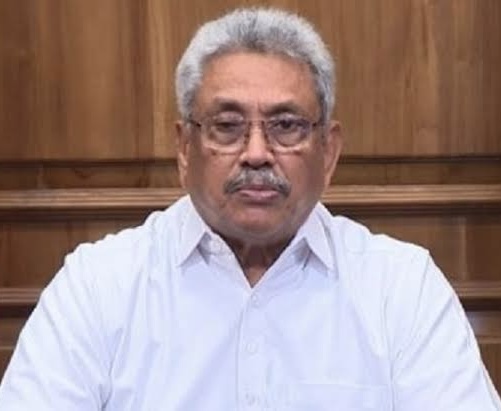
Former Defence Secretary and former President Gotabaya Rajapaksa testified by video link on September 29 in the long-running case concerning the disappearance of political activists Lalith Kumar Weeraraj and Kugan Muruganandan in Jaffna in 2011.
For the proceedings before the Jaffna Magistrate’s Court, Rajapaksa appeared at the Colombo Chief Magistrate’s Court and gave his evidence from there through video technology.
What happened on December 9, 2011?
Lalith Kumar Weeraraj and Kugan Muruganandan disappeared in the Avarangal area of Jaffna on December 9, 2011, according to their relatives and fellow activists.
At the time, they were political activists associated with the Movement for People’s Struggle. Case records indicate that they had been working to bring attention to the concerns of families of the disappeared ahead of International Human Rights Day on December 10.
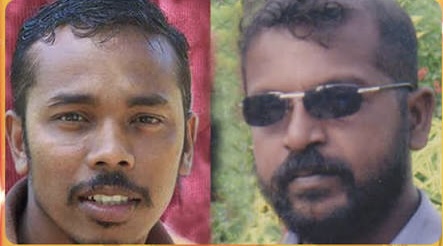
From the outset, allegations were made that a group travelling in a white van had abducted them. However, no final court ruling has yet established who was responsible on the basis of those allegations.
A legal battle that began with a habeas corpus petition
Following the disappearance of Lalith and Kugan, their relatives filed a habeas corpus petition in the Court of Appeal in 2012.
The fundamental aim of the legal action was to find out what had happened to them and where they were.
The Court of Appeal then directed the Jaffna Magistrate’s Court to record evidence from witnesses connected to the incident and submit a report.
Accordingly, the hearing of evidence began at the Jaffna Magistrate’s Court on September 19, 2012.
Why was Gotabaya Rajapaksa called as a witness?
Rajapaksa was Sri Lanka’s Defence Secretary at the time Lalith and Kugan disappeared.
Court proceedings have referred to a public statement by Keheliya Rambukwella, then a government spokesperson, that Lalith and Kugan were alive.
During subsequent proceedings, Rambukwella reportedly said that his statement had been based on information received from the then Defence Secretary, Rajapaksa.
Against this background, Rajapaksa’s name was added to the witness list in 2017. A summons was subsequently issued for him to appear and testify.
He was also notified in March 2019 to appear and give evidence. His representatives, however, cited security concerns about travelling to Jaffna.
Permission to testify by video link
When the case was heard on February 6, 2026, Rajapaksa’s lawyers requested permission for him to testify remotely instead of travelling to Jaffna in person.
After considering the security-related reasons, the court granted permission in June for him to give evidence by video link.
Accordingly, on September 29, Rajapaksa went to the Colombo Chief Magistrate’s Court and was connected remotely to the Jaffna Magistrate’s Court.
He reportedly arrived at the Colombo court complex at around 1:20 p.m., and the recording of evidence began about ten minutes later.
“I do not remember many incidents” – Rajapaksa’s testimony
Attorney Nuwan Bopage questioned Rajapaksa on behalf of the petitioners.
In response to many questions about events roughly 15 years earlier, Rajapaksa said that, because so much time had passed, he could not now recall particular incidents.
Asked whether the disappearance of civilians was considered a matter of national security, he said that people could go missing for various reasons and that police would investigate such incidents, according to court reports.
He testified that not every disappearance was brought before the National Security Council and that information about exceptional incidents might have reached him only in some circumstances.
His explanation of his role as Defence Secretary
Rajapaksa rejected suggestions that, while he was Defence Secretary, he had directly instructed security forces in relation to abductions and enforced disappearances.
He told the court that he had served as Defence Secretary in a civilian capacity and that his responsibility was to coordinate government policies with the relevant security institutions.
He said he had not been directly involved in field operations and had never instructed anyone to carry out unlawful abductions or disappearances.
He also rejected allegations linking security forces and intelligence units to abductions and enforced disappearances during his tenure. His position was that these allegations were made for political purposes and to damage the country’s reputation.
These are positions Rajapaksa put before the court; they should not be understood as facts that the court has established in this case.
Questions about other disappearances and abductions
During cross-examination, Rajapaksa was questioned not only about Lalith and Kugan but also about other alleged abductions and disappearances from that period.
Questions were asked in particular about the reported abduction and assault of journalist Keith Noyahr.
Rajapaksa said he remembered Noyahr but could not recall the full details of the incident. He also denied the suggestion that he had personally intervened and given orders in that matter.
These questions were raised as part of cross-examination concerning Rajapaksa’s authority as Defence Secretary at the time, the information available to him and his relationship with the security institutions. They were not separate charges against him in the Lalith–Kugan disappearance case.
A peaceful protest outside the court
While Rajapaksa was at the Hulftsdorp court complex in Colombo to testify, a peaceful protest took place outside.
Those associated with the Frontline Socialist Party who organised the protest called for the truth about what happened to Lalith and Kugan, as well as the fate of other missing persons, to be established.
Further testimony on November 27
As the recording of evidence on September 29 was not completed, the case was adjourned to November 27 to take further testimony from Rajapaksa.
Arrangements have been made for him to appear again at the Colombo Chief Magistrate’s Court on that date and testify remotely to the Jaffna Magistrate’s Court.
About 15 years after Lalith Kumar Weeraraj and Kugan Muruganandan disappeared, there is still no final answer as to what happened to them.
It is important to distinguish Rajapaksa’s role in these proceedings: he has been called as a witness. The September 29 hearing was neither a criminal verdict against him nor a court finding that he was responsible for the disappearances.
His evidence was recorded as part of the long-running inquiry arising from the habeas corpus petition. The next stage is due to continue on November 27.
Reader Comments
Loading comments…