
ARTICLES · GENERAL
Is Celebrating Tamil Election Victories Racism? A Response to Those Who Have Forgotten History!
Dear friends,
Certain paramilitary groups that, in my view, sided with Sinhala-Buddhist majoritarian governments which oppressed Tamils and undermined their political rights and national identity, together with some Tamil political groups opposed to Tamil nationalist politics and individuals hostile to Tamil national consciousness, are now criticising the celebration of Tamil electoral victories in Canada as an expression of racism.
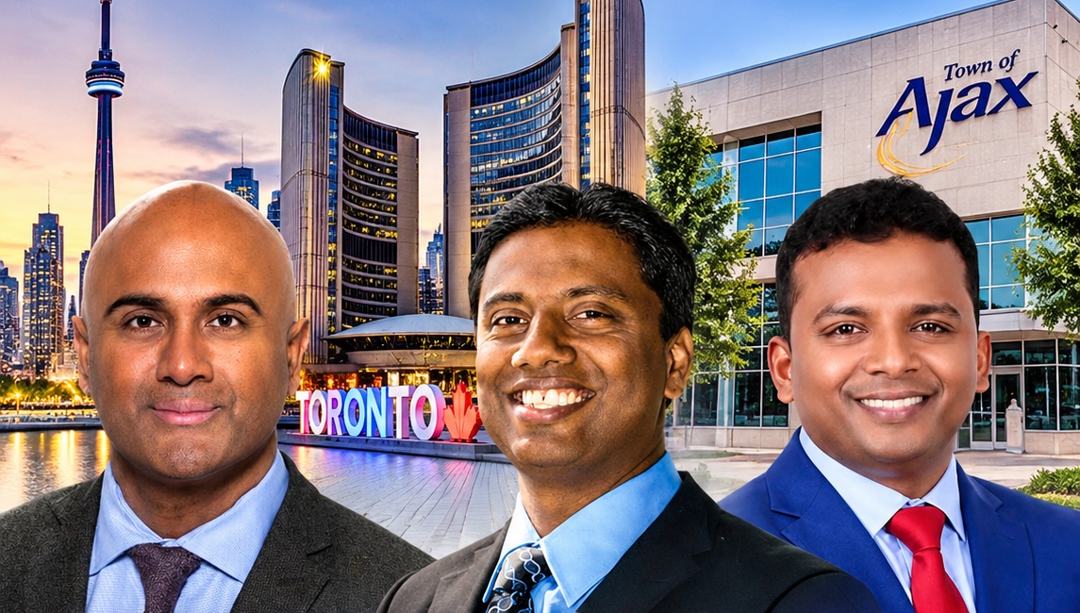
In Ontario’s municipal elections held on 26 October 2026, Parthi Kandavel and Neethan Shan won seats on Toronto City Council, while Ranjith Paranivasagam was elected to the regional councillor position representing Ward 2 in Ajax. These are achievements that Tamils can take pride in.
But those who call such celebrations racist appear to have forgotten an important history.
The damage to Tamil language rights caused by the Sinhala Only Act of 1956, the violence directed against Tamils that same year, the anti-Tamil killings of 1958, the ethnic violence of 1977, the burning of the Jaffna Public Library in 1981, and the attacks on Tamils during Black July in 1983 cannot be erased from the history of Eelam Tamils.
Behind descriptions of these events as 'communal riots' lie killings, homes and businesses set ablaze, property looted, and the continuing insecurity faced by Tamil people in their own homeland. This painful history of oppression extended through the years of war to the catastrophe at Mullivaikkal in 2009.
How could Tamils simply forget this history?
The story of Eelam Tamils who left their homeland as refugees and asylum seekers to protect their lives, their families and their children is no ordinary story of migration.
It is a painful history of displacement shaped by ethnic oppression, the denial of political rights and war.
Canada is among the countries that offered a new home to these displaced Tamils and to the generations that followed.
The progress made by Tamils in Canada’s democratic political life cannot be separated from that history of migration.
Neethan Shan, who was born in Jaffna and, according to the account presented here, came to Canada as a refugee at the age of 16, has now won re-election to Toronto City Council. His journey illustrates the heights that someone who arrived as a Tamil refugee can reach in Canada’s democratic system.
Likewise, the electoral victories of Parthi Kandavel and Ranjith Paranivasagam reflect the Canadian Tamil community’s growing contribution to civic and political life.
No one is required to agree with all these representatives’ individual political positions or affiliations. But what is wrong with Tamils taking pride in the advances made by people of Tamil heritage in Canadian public life?
Not only Canadian Tamils, but Eelam Tamils living in countries around the world after displacement caused by oppression and war in Sri Lanka have every right to regard such achievements as progress for their community.
I also wish to recall another part of this history.
A Tamil genocide memorial has been established in Chinguacousy Park in Brampton, Canada, to bear witness to the persecution Tamils faced in Sri Lanka and to the history of suffering that Tamils remember as genocide.
The memorial, unveiled on 10 May 2025, serves as a place to remember Tamils who died in Sri Lanka and to pass their stories on to future generations.
When a memorial has been established in Canada to remember Tamil suffering, how can it be fair to describe the celebration of Tamil success in that same country’s democratic politics as racism?
To forget the periods in which Tamil political rights were denied in Sri Lanka, and the insecurity of Tamil lives and property, while viewing the political advances of diaspora Tamils only through the lens of racism, reveals, in my opinion, an unwillingness to understand history.
Those paramilitary groups I criticise for supporting Sinhala-Buddhist majoritarian politics, those political factions opposed to Tamil nationalism, and those individuals hostile to Tamil national consciousness should understand one thing.
Everyone has the right to criticise the politics and actions of the Liberation Tigers of Tamil Eelam (LTTE). But opposition to the LTTE cannot justify belittling Tamil national identity, the suffering recorded in Tamil history, or the achievements of diaspora communities.
Although the LTTE and Tamil national consciousness have intertwined historical backgrounds, Tamil language, identity, culture and political rights do not belong exclusively to any one organisation.
Tamil national consciousness had roots in struggles for Tamil political rights long before the LTTE was founded. That must not be forgotten.
Those who oppose Tamil national identity under the banner of opposition to the Tigers, minimise Tamil historical suffering, or disparage the victories of diaspora Tamils must be prepared to defend their positions before history.
The actions of those who aided injustices against Tamils should be documented. Anyone responsible for criminal offences should be held accountable under the law. At the same time, addressing political disagreements through democratic means demonstrates political maturity.
Tamils who once left Sri Lanka unable to protect their lives and rights, along with their families and later generations, now demonstrate their skills and abilities in education, business, community service and politics in Canada, Britain, European countries, Australia and elsewhere.
Their advances have emerged through their own hard work and through the opportunities and democratic institutions of the countries in which they settled.
At the same time, neither the history of displacement behind these achievements nor the sense of Tamil identity carried across generations can be ignored.
Taking pride in a Tamil electoral victory does not mean celebrating the defeat of another ethnic community.
Nor does it mean disparaging another community.
Rather, it is an expression of pride in the progress of a new generation while remembering the past and the suffering endured by its people.
Those who condemn this sentiment as racism should first answer a historical question.
Why were Tamils compelled to leave their homeland as refugees?
Without understanding the political causes of that displacement and the human suffering behind it, describing the celebration of diaspora Tamil electoral success as racism looks to me like an attempt to obscure history.
Descendants of people who were denied rights in their homeland because they were Tamil are now advancing in the democratic politics of the countries to which they migrated.
They have every right to take pride in that progress.
Tamil identity and national consciousness are not, in themselves, racism. Remembering the past and celebrating the achievements of one’s community is an expression of identity and pride.
Swami Shankaranandaa 🙏
Reader Comments
Loading comments…